
Seismology is a ground-based remote sensing technique that enables the continuous monitoring of distant processes through the analysis of the seismic waves they emit. The discharge of the Zackenberg River in Northeast Greenland has been monitored for three decades using conventional discharge measurements, which are labour-intensive and can be dangerous during floods. The new seismological method was intended to ‘listen’ to the Zackenberg River in order to assess the scaling relationship between seismic data and river data.
How can rivers be "listened to"?
Over the past two decades, environmental seismology has gained in popularity thanks to technological and methodological innovations. The traditional focus of seismology has broadened from the analysis of discrete events, such as earthquakes, to emergent (evolving) and continuous signals that were previously regarded as seismic noise. Scales and Snieder (1998) made it clear that seismic noise is regarded as ‘the part of the data that we do not attempt to explain’. The resulting innovations have made the local monitoring of various environmental processes both practical and economically viable (Larose et al., 2015).
River discharge and runoff are fundamental monitoring variables crucial for many ecological processes as well as industrial applications. Classical river discharge monitoring depends on regular in-river measurements which are labor-intensive and can be hazardous during high water levels. Turbulent water flow stimulates seismic waves through bedload collisions and river bed friction which can be continuously recorded by a distant seismic station. Gimbert et al. (2014) presented a physical model quantitatively describing the seismic noise generation of rivers. They showed that the turbulent water flow stimulates seismic noise in the lower frequency band (~1-10 Hz), which scales with the magnitude of the river discharge.
Using seismic river monitoring, the GRuMPS project led by the University of Sheffield (UK) aims to implement systematic, continuous and near-real-time discharge monitoring of major glacier catchments around the Greenland Ice Sheet. The glaciers of these catchments terminate on land as well as in the ocean. The transfer of this innovative remote-sensing technique to estimate the runoff of marine-terminating outlet glaciers is one of the greatest challenges of the GRuMPS project. In the first phase of GRuMPS seismic stations are being installed next to rivers with operational hydrological monitoring to test installation strategies and evaluate the scaling between seismic and river data. One of these test sites is the Zackenberg River in Northeast Greenland, where river discharge has been monitored for three decades (Binder et al., 2026). The continuity and quality of this long-term monitoring is ensured by ClimateBasis, a sub-program of the Greenland Ecosystem Monitoring program, and is managed by Asiaq, a GRuMPS project partner. In the summer of 2021, two seismic stations were installed near the Zackenberg River as part of the NOW project. Fortunately, these two stations are still operating to this day and have been integrated into the GRuMPS network.
The Zackenberg River
Location of Zackenberg Ecological Research Operations (ZERO) (© Google Maps)
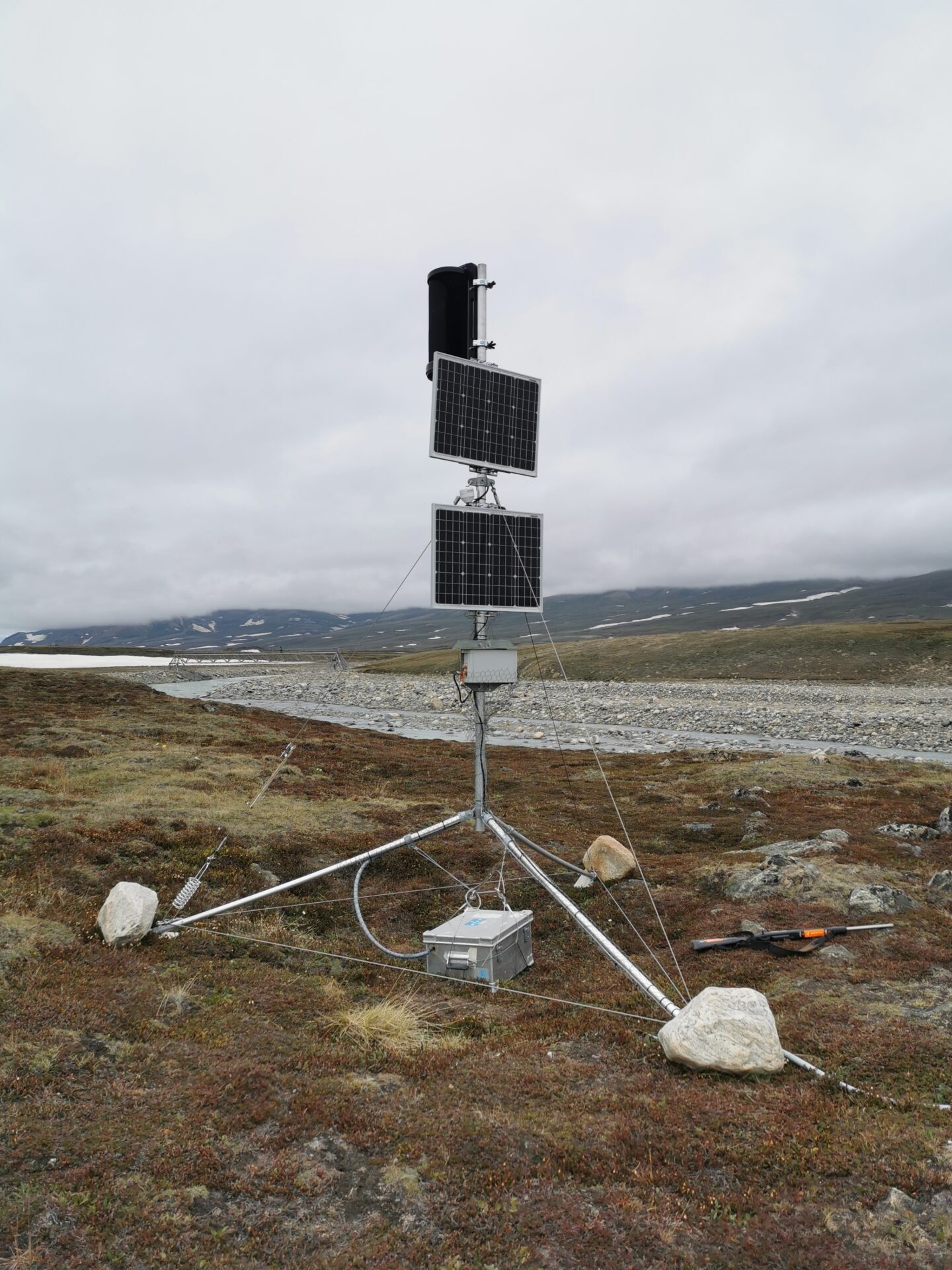
The NOW river station, operating since the summer of 2021 and now serving as a GRuMPS monitoring site (© Daniel Binder)
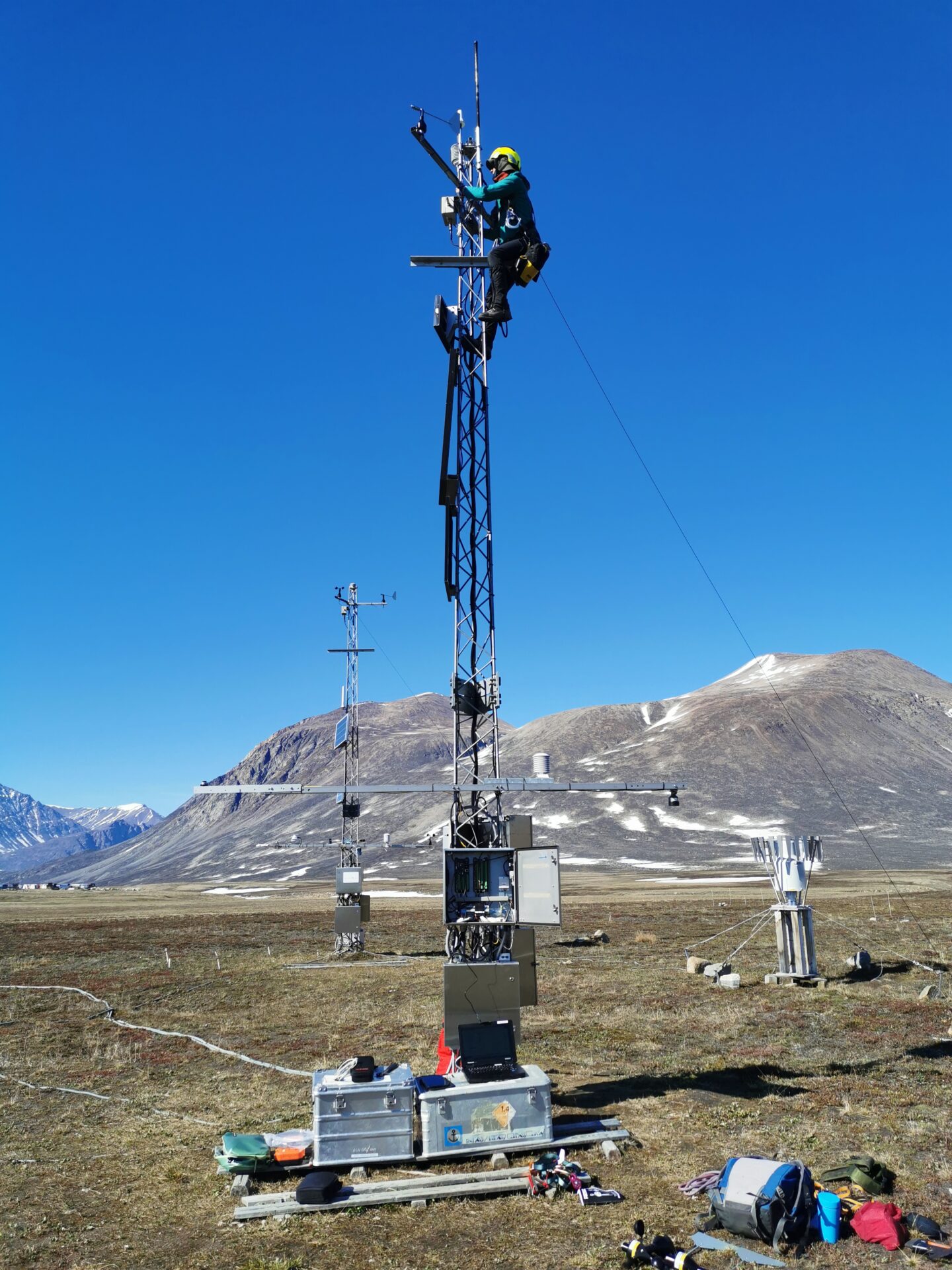
Kirsty Langley scaling the 7-meter-high climate mast to service the meteorological instruments (© Daniel Binder)
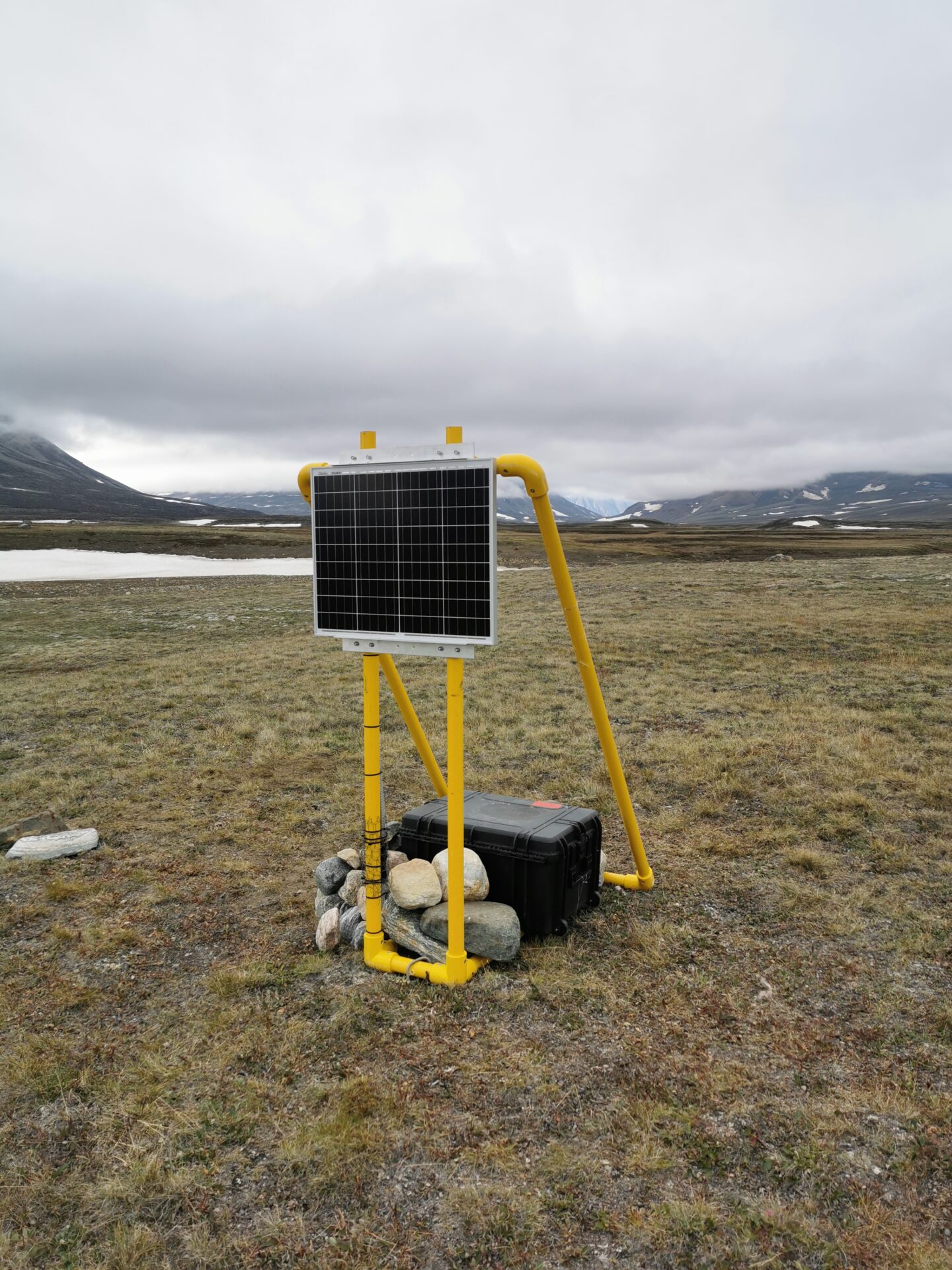
A newly installed GRuMPS station featuring an alternative design, deployed during the summer 2026 fieldwork (© Daniel Binder)
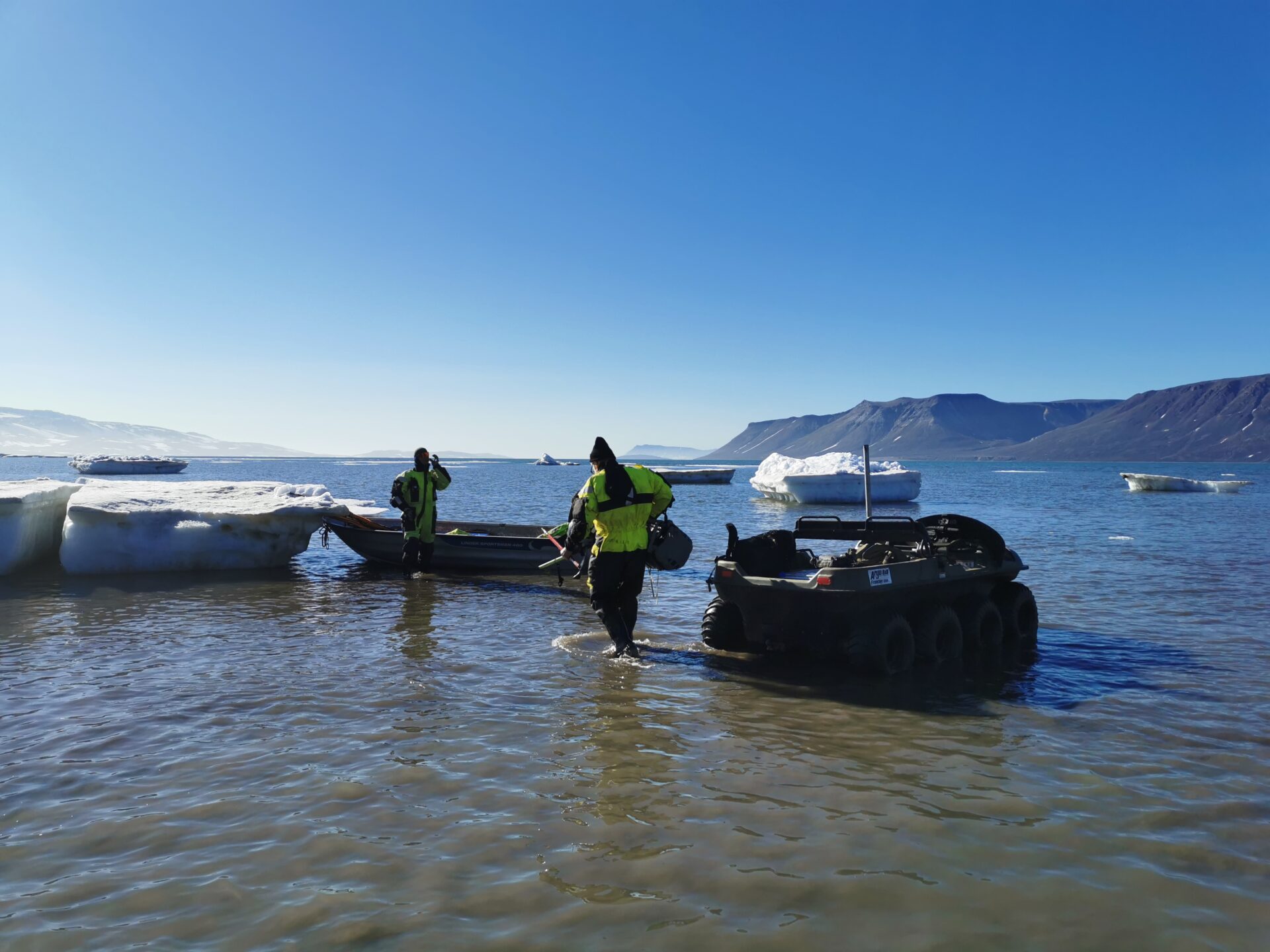
Alongside the GRuMPS installations, we completed the annual ClimateBasis fieldwork. This involved conducting river discharge surveys using an Acoustic Doppler Current Profiler, as well as servicing local weather stations and other environmental monitoring equipment. To map the full cross-sectional flow profile and accurately calculate river discharge, the device was carefully guided across the width of the river.
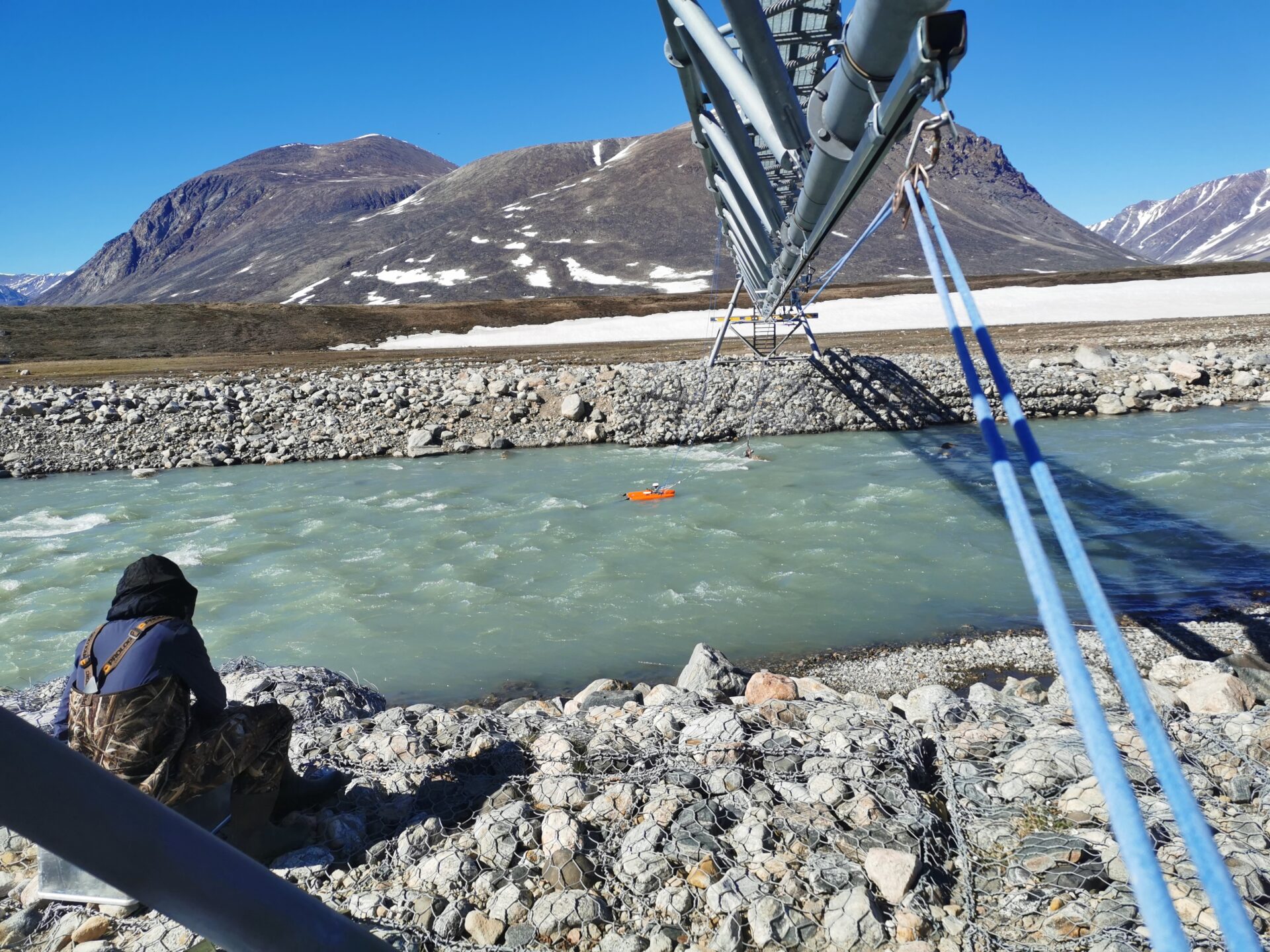
Zackenberg River discharge survey using an Acoustic Doppler Current Profiler (© Daniel Binder)
Synergies with other projects
Finally, we made a trek to the automated camera monitoring the Freya Glacier to resolve an ongoing technical issue. Because the glacier was still heavily snow-covered, we scouted a glacier-free route directly to the camera site. Though rocky and rugged, it proved to be a highly viable alternative path.
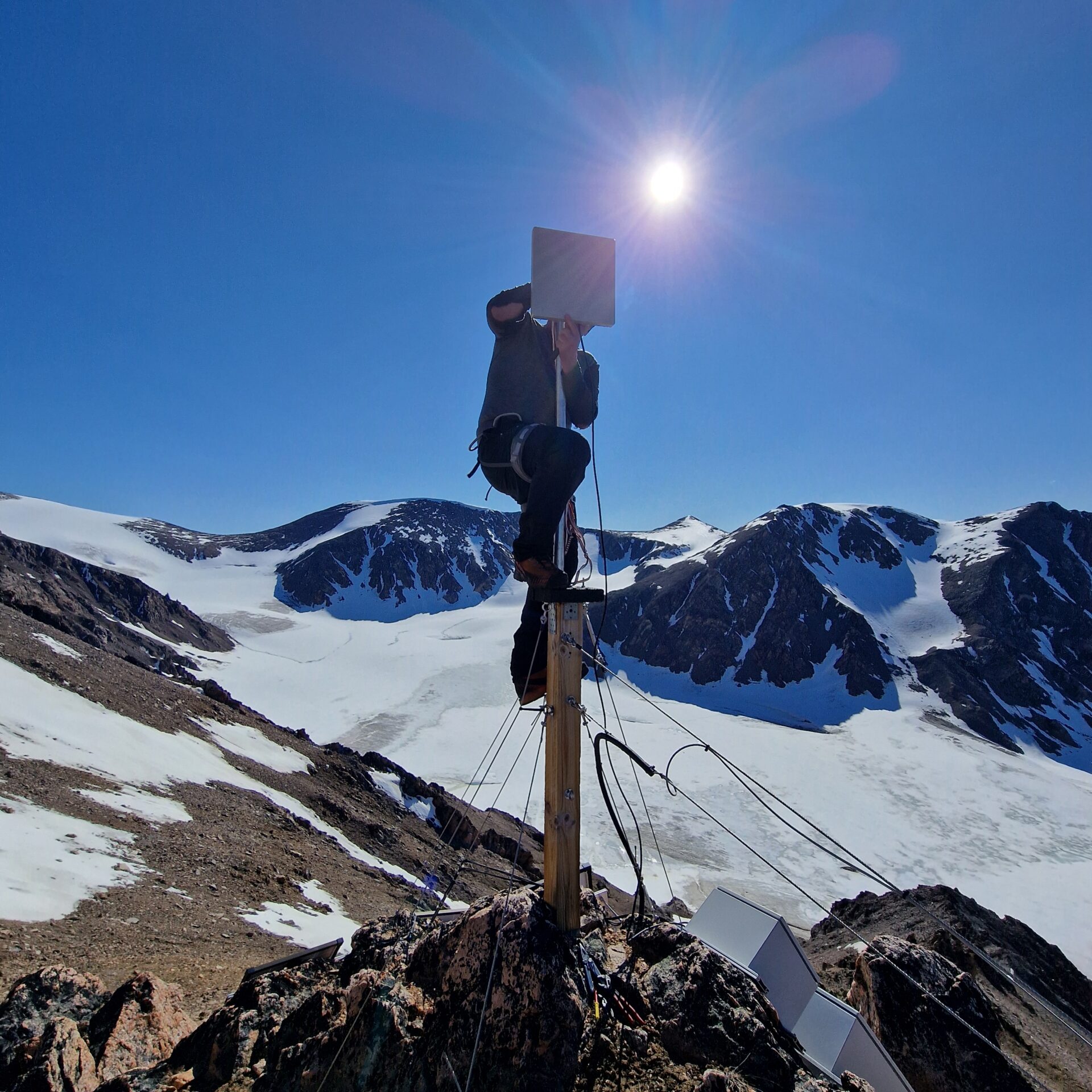
Daniel Binder adjusting the WLAN antenna on the automated Freya camera to optimize signal quality for reliable photo transmissions (© Kirsty Langley)
All in all, it was another fantastic stay at Zackenberg, offering a unique perspective of a season I had not yet experienced. The only downside to this specific time of year was the myriads of mosquitoes, which made fieldwork without a head net on calm, sunny days absolutely impossible.
We are eagerly looking forward to analyzing the incoming seismic data from the Zackenberg River and hope it will substantially contribute to the ultimate success of the GRuMPS project.
Media information
Written by Daniel Binder.
Layout: APRI-Media-Team.
Contact: use our contact form.
Photos: page header and thumbnail ©Daniel Binder.
About the scientific author
Daniel Binder is an Arctic researcher affiliated with the Austrian Polar Research Institute (APRI) under the Research Group Hynek. He is currently pursuing his PhD at the Institute for Geosciences, Potsdam University. His doctoral project, “Seismic characteristics of subglacial floods,” is supervised by Prof. Eva Eibl.
Literature
Binder, D., Langley, K., Larsen, S.H., Mastepanov, M., Abermann, J., Citterio, M., Eibl, E.P.S., Hammann, A.C., Hynek, B., Kjeldsen, K.K., Rudd, D.A., Schöner, W., Skov, K., Sørensen, E.V., Tamstorf, M., 2026. Three decades of high-Arctic river monitoring revealed no trend in runoff and a regime shift in glacial lake outburst floods. Journal of Hydrology: Regional Studies 66, 103651. https://doi.org/10.1016/j.ejrh.2026.103651
Gimbert, F., Tsai, V.C., Lamb, M.P., 2014. A physical model for seismic noise generation by turbulent flow in rivers. Journal of Geophysical Research: Earth Surface 119, 2209–2238. https://doi.org/10.1002/2014JF003201
Larose, E., Carrière, S., Voisin, C., Bottelin, P., Baillet, L., Guéguen, P., Walter, F., Jongmans, D., Guillier, B., Garambois, S., Gimbert, F., Massey, C., 2015. Environmental seismology: What can we learn on earth surface processes with ambient noise? Journal of Applied Geophysics 116, 62–74. https://doi.org/10.1016/j.jappgeo.2015.02.001
Scales, J.A., Snieder, R., 1998. What is noise? Geophysics 63, 1122–1124.
Related articles
‘Listening’ to the Zackenberg River

Freya Glacier: Avalanches do matter!

FREYA Glacier: Long time no see!

Glacier Elvis from Outer Space – Part II