
APRIAPRIAPRI
search
Menu
  • News
  • Events
  • Research
    • Polar Ecology
    • Cryosphere & Climate
    • Social & Cultural Systems
  • Faculty
    • Abermann
    • Bartsch
    • Füreder
    • Haimberger
    • Heinz
    • Herndl
    • Hynek
    • Loy
    • Moseley
    • Povoroznyuk
    • Prinz
    • Richter
    • Rieder
    • Rott
    • Sattler
    • Saxinger
    • Schöner
    • Schweitzer
    • Trügler
    • Former Faculty Members
  • Publications
    • Scientific
    • Annual Meeting Presentations
  • Press & Media
  • APECS Austria
  • About
  • German
  • search
Close Search
© Christoph Ruhsam, www.pure-landscapes.net | APRI
Category

Mining

Aug 20
Love0

The Arctic as a contested resource region

By Yannika Baier Blog, Mining, Social and Cultural Systems
The Arctic, including its sub-Arctic reaches south of the Arctic Circle, is home to approximately four million people, half a million of whom are Indigenous and belong to over 50 language groups. It encompasses eight coastal states neighbouring the Arctic…
Read More

Jun 17
Love0

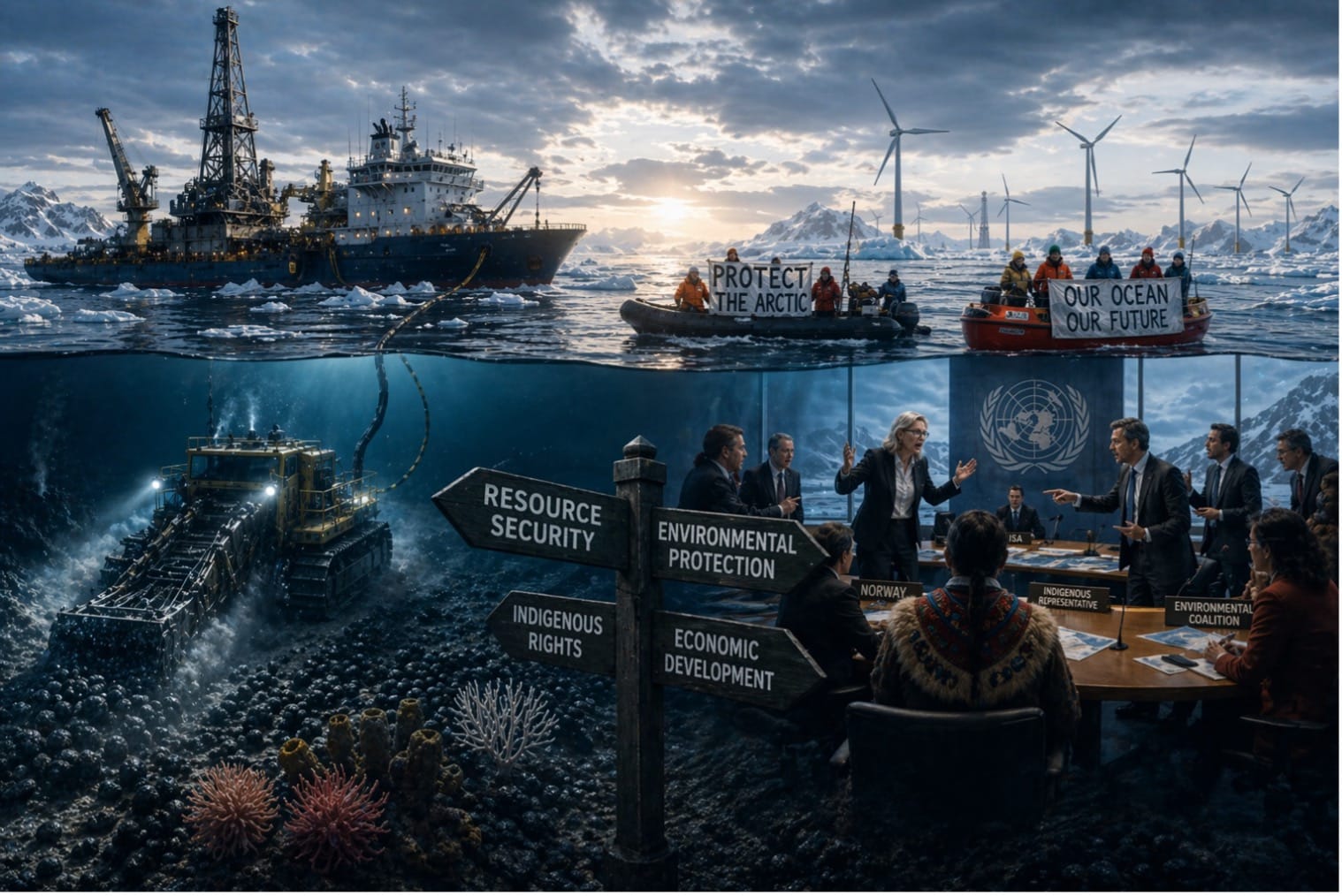
Arctic Deep-sea Mining at a Crossroads

By Yannika Baier Deep-sea mining, Mining, Social and Cultural System
So, what exactly do we mean by Arctic deep-sea mining? We’re talking about the extraction of minerals like manganese, cobalt, nickel, copper, and rare earth elements - materials essential for the energy transition - from depths often beyond 200 meters.…
Read More

Search

Latest News

  • Polar Talk #22 – Small Shells, Great Significance: Foraminifera in a Changing Arctic
  • The Arctic as a contested resource region
  • ENVEO joined APRI!
  • The KINDLE Project: Connecting Caves, Climate and Communities
  • Arctic Deep-sea Mining at a Crossroads

Categories

  • Allgemein
  • Annual Meeting
  • APECS Events
  • APECS Events
  • APECS Ressourcen
  • Austrian Polar Research Station
  • Award
  • Blog
  • Climate Change
  • Co-creation
  • Cryosphere
  • Cryosphere & Climate
  • Deep-sea mining
  • Events
  • Expedition
  • Feldbericht
  • Field report
  • Franz Josef Land
  • Glaciology
  • Guest Article
  • History
  • Interview
  • Interview
  • Klimawandel
  • Kryosphäre & Klima
  • Kryosphäre & Klima
  • Lecture
  • Mining
  • Multimedia
  • News
  • Online
  • Polar Ecology
  • PolarTalk
  • Report
  • Science communication
  • Sermilik
  • Social and Cultural System
  • Social and Cultural Systems
  • Vortrag

Tags

abermann abermann_DE antarctica anthropocene anthropology arctic austrian polar research station cave climate climatechange climate change climatology cryosphere cryosphere CryosphereClimate ecology ecosystem energy budgets environmentalscience expedition Freya glacier greenland greenlandicesheet grönland guest article indigenous InfraNorth klimawandel microplastics Multimedia permafrost polarecology Polar Ecology polarresearch polartalk pollution science sermilik snow2rain snow2school social-and-cultural-systems socio-economic-changes untersee Österreichische Polarforschungsstation

IMPRINT
PRIVACY POLICY

CONTACT

Austrian Polar Research Institute
c/o Institut für Paläontologie,
Universität Wien
Josef-Holaubek-Platz 2 (UZA II)
1090 Wien

Administration:
Iris Hansche, MSc
Contact: Use our contact form
Newsletter subscription


NEWS AT APRI

  • Polar Talk #22 – Small Shells, Great Significance: Foraminifera in a Changing Arctic
  • The Arctic as a contested resource region
  • ENVEO joined APRI!

© 2026 APRI. All rights reserved.

  • twitter
  • facebook
  • instagram
Close Menu
  • News
  • Events
  • Research
    • Polar Ecology
    • Cryosphere & Climate
    • Social & Cultural Systems
  • Faculty
    • Abermann
    • Bartsch
    • Füreder
    • Haimberger
    • Heinz
    • Herndl
    • Hynek
    • Loy
    • Moseley
    • Povoroznyuk
    • Prinz
    • Richter
    • Rieder
    • Rott
    • Sattler
    • Saxinger
    • Schöner
    • Schweitzer
    • Trügler
    • Former Faculty Members
  • Publications
    • Scientific
    • Annual Meeting Presentations
  • Press & Media
  • APECS Austria
  • About
  • German
    This site uses Statcounter to analyze and understand visitor navigation paths. We take user privacy serious and don’t attempt to identify an individual person. Only anonymized data are retrieved with focus on what visitors to this website do, not who that visitor is. We do not store and/or process personal data of any kind and thus fully comply with the GDPR.