

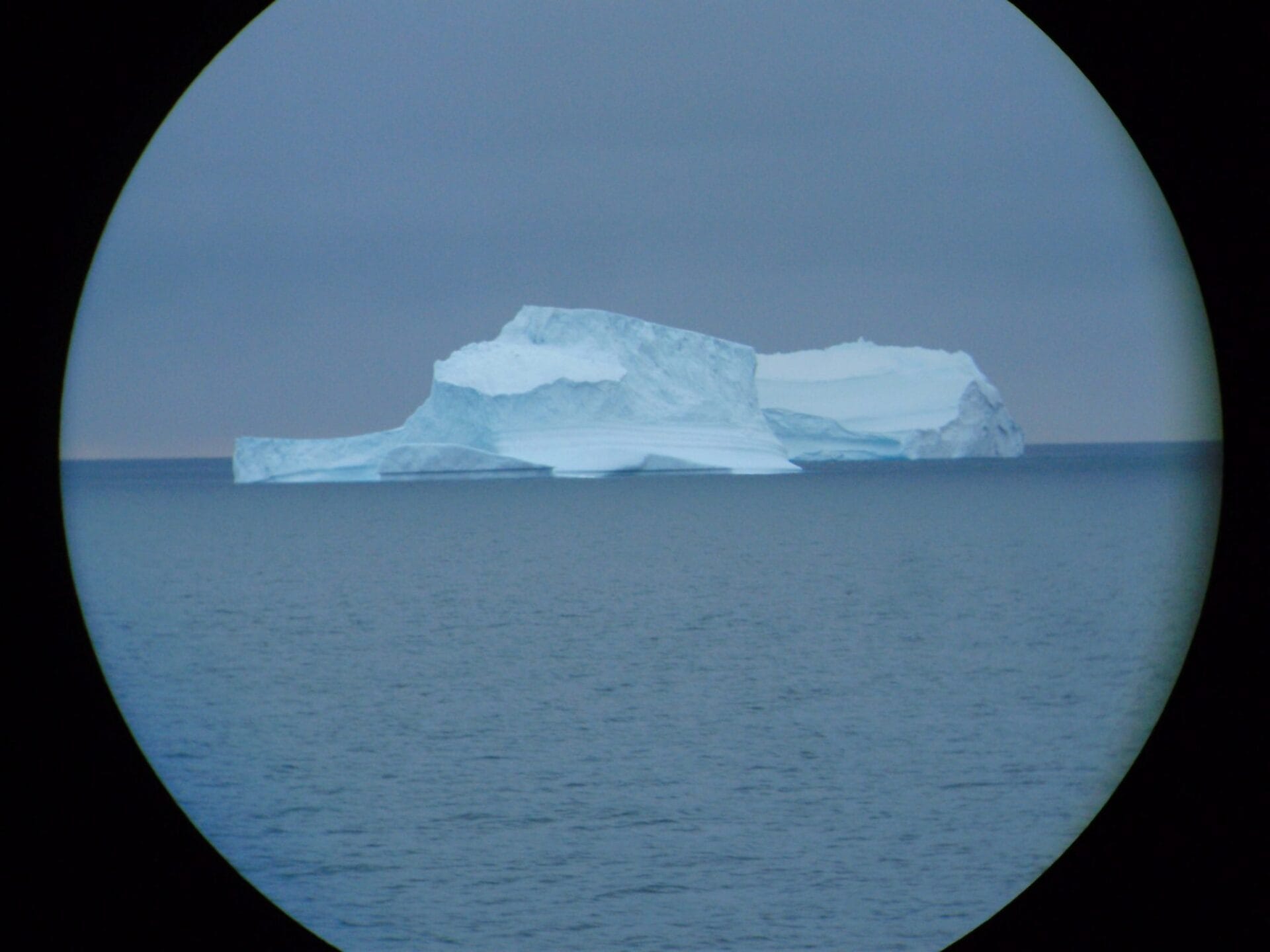
A summary of Polar Talk #22 by APRI board member an research group leader Prof. Petra Heinz (University of Vienna), focusing on the collection and study of foraminifera—small marine single-celled organisms that serve as important bioindicators in the Arctic.
Foraminifera are single-celled marine organisms, ranging in size from approximately 50 µm to several centimetres, and have been present since 540 mio. years. They are globally distributed and play an important role in the ocean. As bioindicators, they provide information about environmental conditions such as food availability, oxygen, temperature, salinity, water depth, and carbonate chemistry. Their high sensitivity makes them an early-warning system for environmental change, while their long-lasting shells preserved in sediments provide a window into climate history. In the Arctic, their distribution is particularly influenced by low food availability, variable salinity, cold water, and shell dissolution.
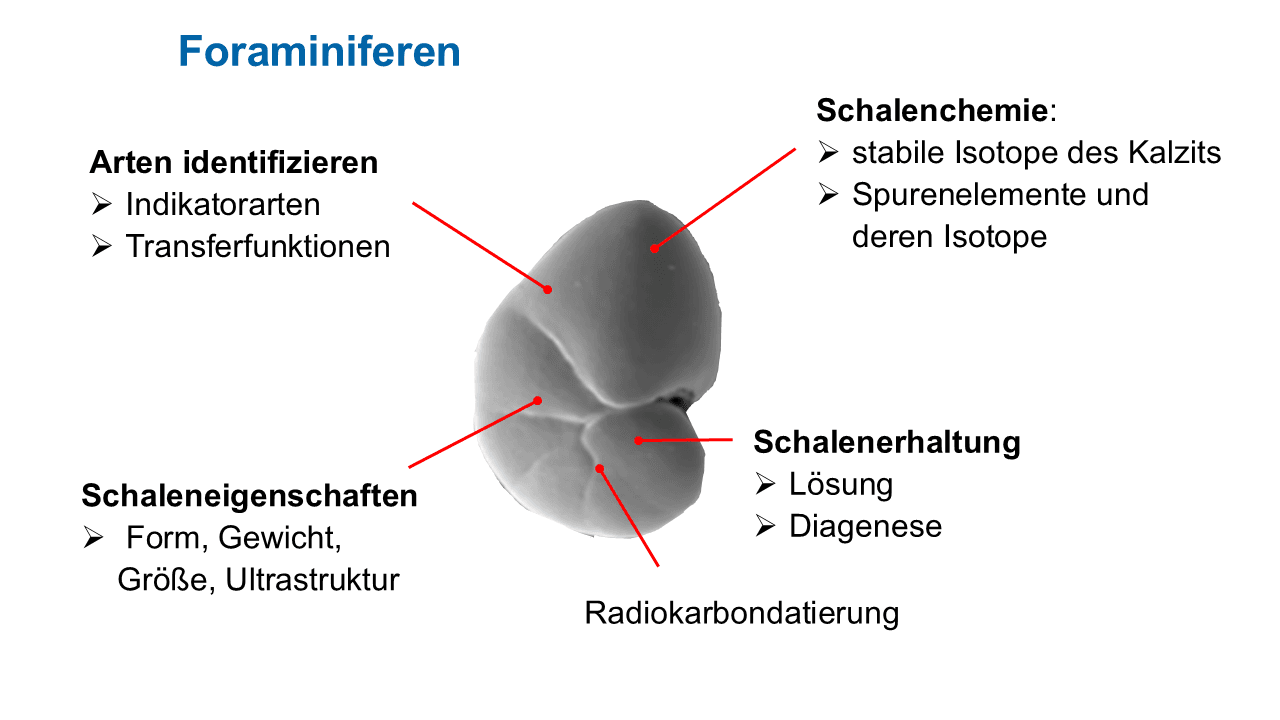
Foraminiferal proxies for reconstructing environmental conditions (Copyright Heinz)
“Foraminifera detect changes in the ocean at an early stage and preserve traces that help us understand climate history.”
Univ.-Prof. Dr. Petra Heinz
Foraminiferal Research in the Arctic – Three Case Studies
The following examples illustrate how our research group studies benthic (i.e. creatures that live on the seabed) foraminifera in the Arctic. Seafloor samples are often collected using a multicorer and preserved and stained with ethanol and Rose Bengal to distinguish living from dead individuals, the cell bodies of living individuals turn red in the process. After sieving, the foraminifera are hand-picked under a microscope, counted, and identified.
In Baffin Bay, we made the surprising discovery that even in northern, extremely cold, and carbonate-aggressive environments—where no calcareous benthic foraminifera had previously been reported — a small number of calcareous individuals can survive.
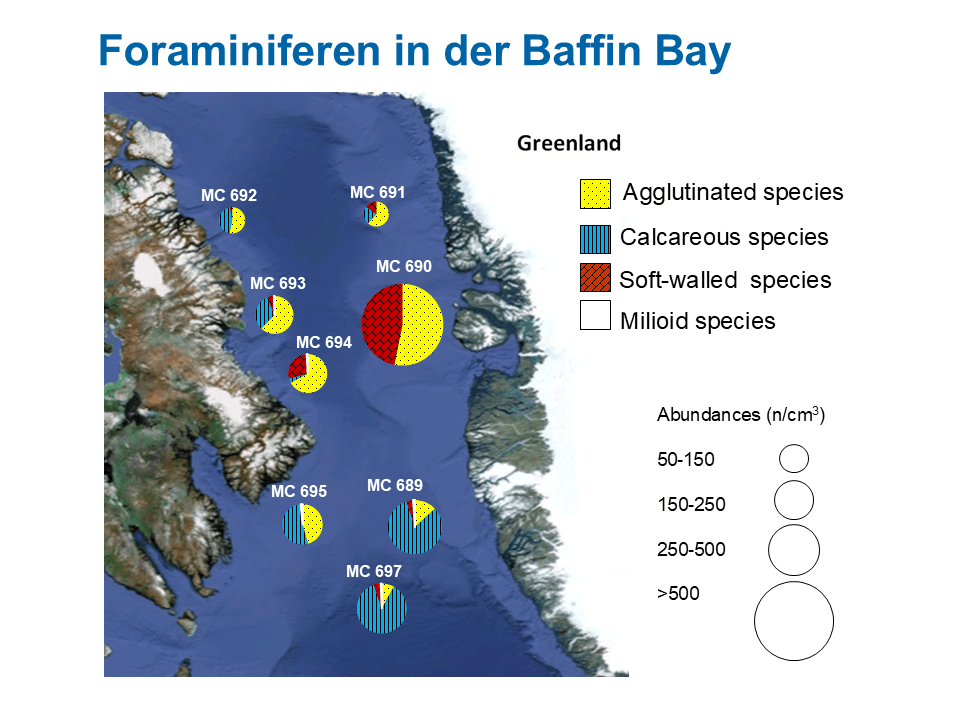
Distribution of living benthic foraminifera in Baffin Bay (Copyright Heinz)
At Karasik Seamount, a biodiversity hotspot in the central Arctic, dense communities of large sponges (Geodia gardens) provide an important habitat for foraminifera. We also discovered two new species, Turrispirillina karasikensis and Turrispirillina pervesleri, both of which have spines that may represent an adaptation to living within the sponge habitat.
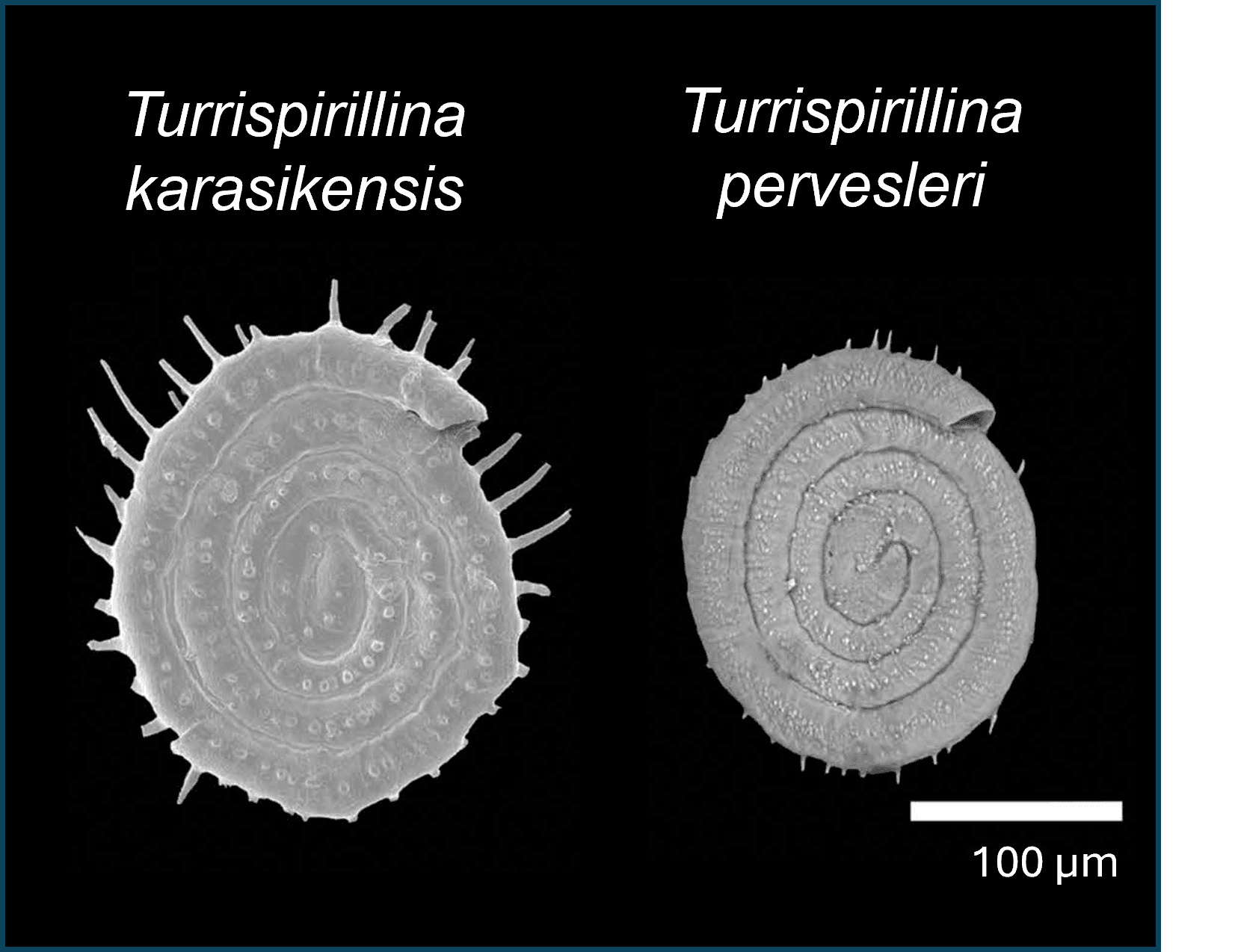
Two new foraminiferal species living in Geodia sponges at Karasik Seamount (modified from Bukenberger et al., 2020)
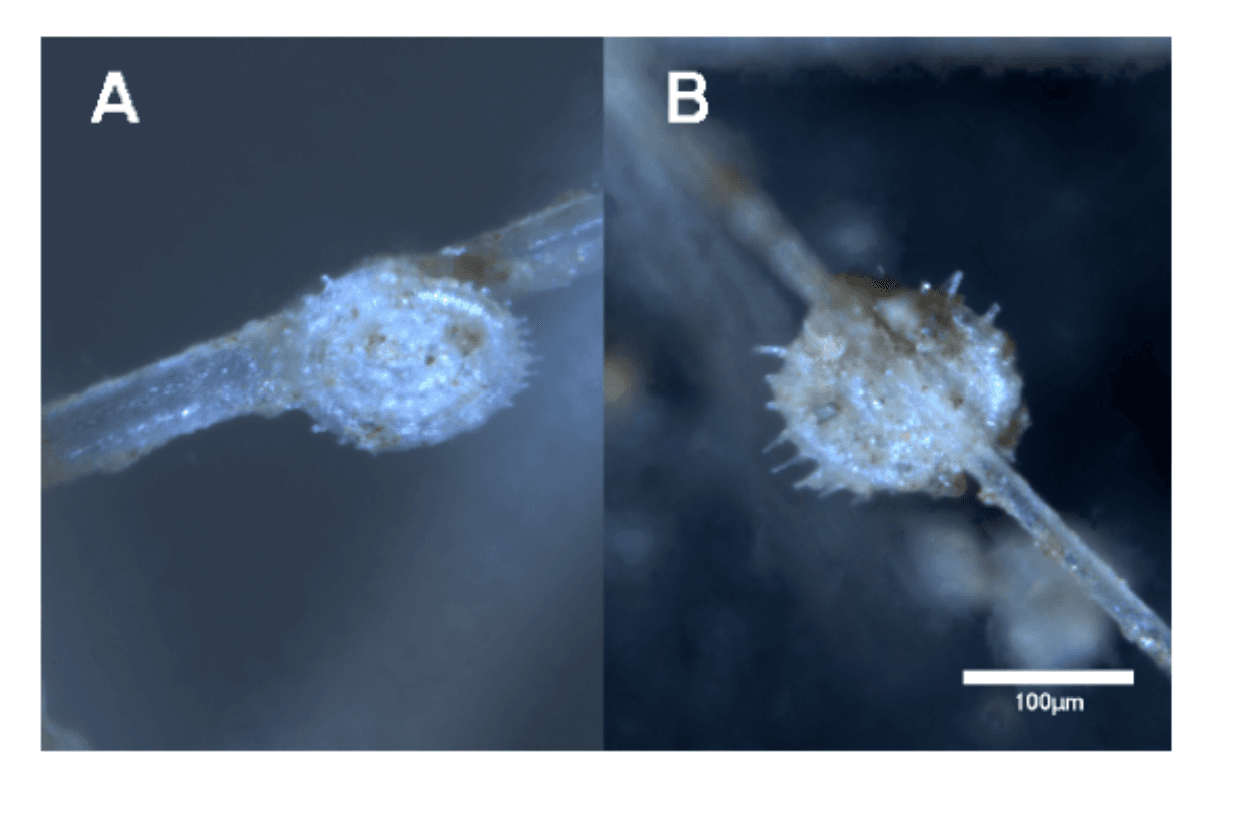
Turrispirillina karasikensis and T. pervesleri attached to Geodia sponge spicules (modified from Bukenberger et al., 2020)
Along the northwestern continental margin of Svalbard, we documented for the first time in the Arctic how benthic foraminifera respond to a fresh food pulse. Recently sedimented algae formed a layer of phytodetritus that was rapidly colonized by several foraminiferal species, which reproduced strongly as opportunists. In the figure below, the top two boxes show how many individuals of which foraminifera species were living in this phytodetrital layer at the time of sampling (top left), as well as their percentage distribution (top right). In contrast, the bottom two boxes show what was living in the underlying sediment layer (surface sediment) at that time (bottom left: the number; bottom right: the percentage distribution). These findings demonstrate how sensitive and adaptable Arctic foraminifera are to environmental and food variability.
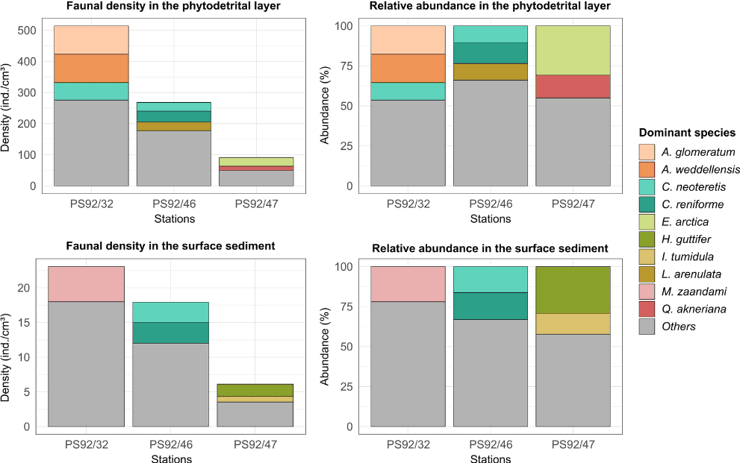
Distribution of living benthic foraminifera at three stations northwest of Svalbard (from Faizieva et al., 2026)
New Samples: First Insights and Open Questions
In 2025, numerous new samples were collected during two field campaigns and are now awaiting detailed analysis.
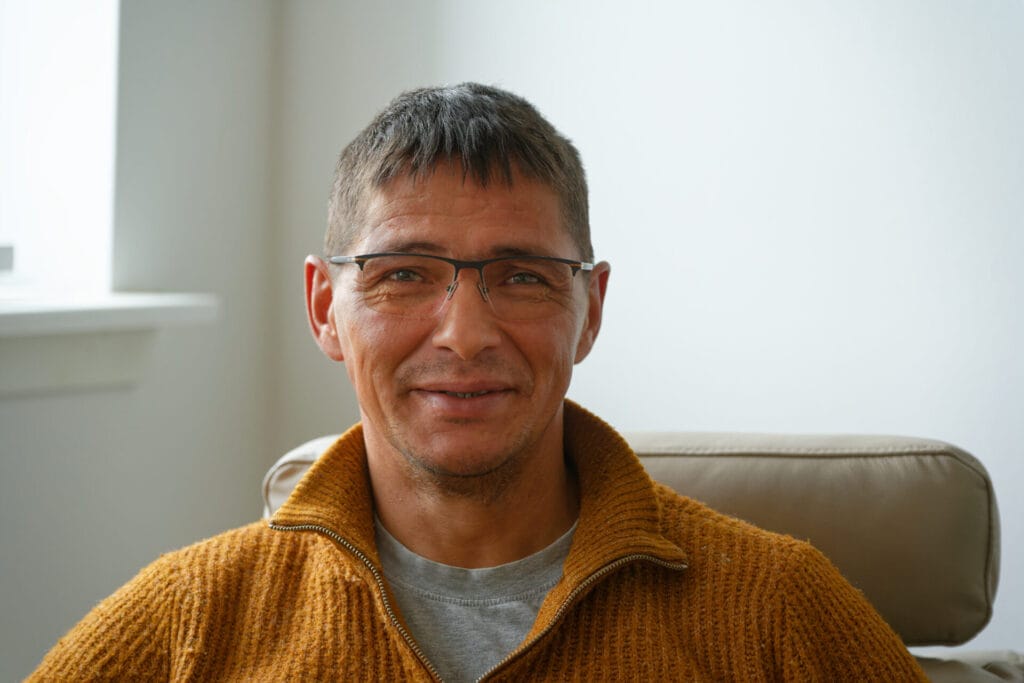
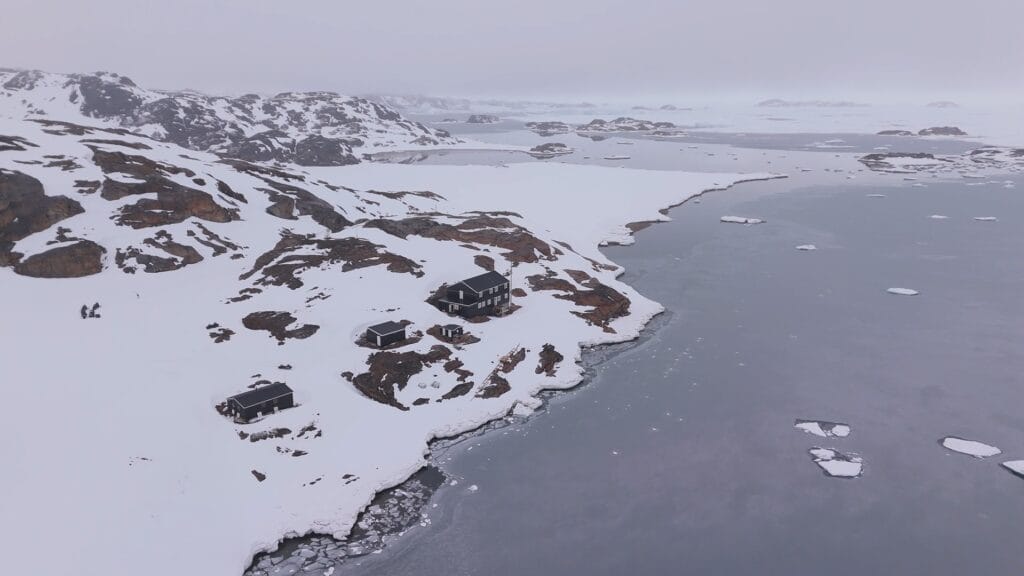
The first campaign took place at the Sermilik Research Station in East Greenland. The area includes a tidal flat and a shallow bay that quickly descends into a deep fjord. With the support of station technician Julius Nielsen, we were able to collect sediment samples down to 200 m water depth.
Initial results reveal a surprisingly high diversity of benthic foraminifera, with all major shell types represented. Many individuals were probably still alive when the samples were collected, and shell preservation is excellent. Of particular note is a species community comprising numerous deep-water species – an assemblage with predominantly bathyal to abyssal characteristics, even though the samples were taken from the shallow bay; at the same time, a few shallow-water indicator species are also present. At the same time, several shallow-water indicator species are also present.
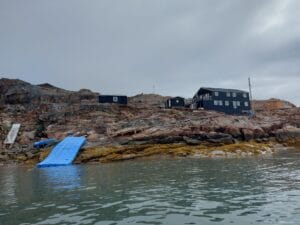
Sermilik Research Station (© Palme)
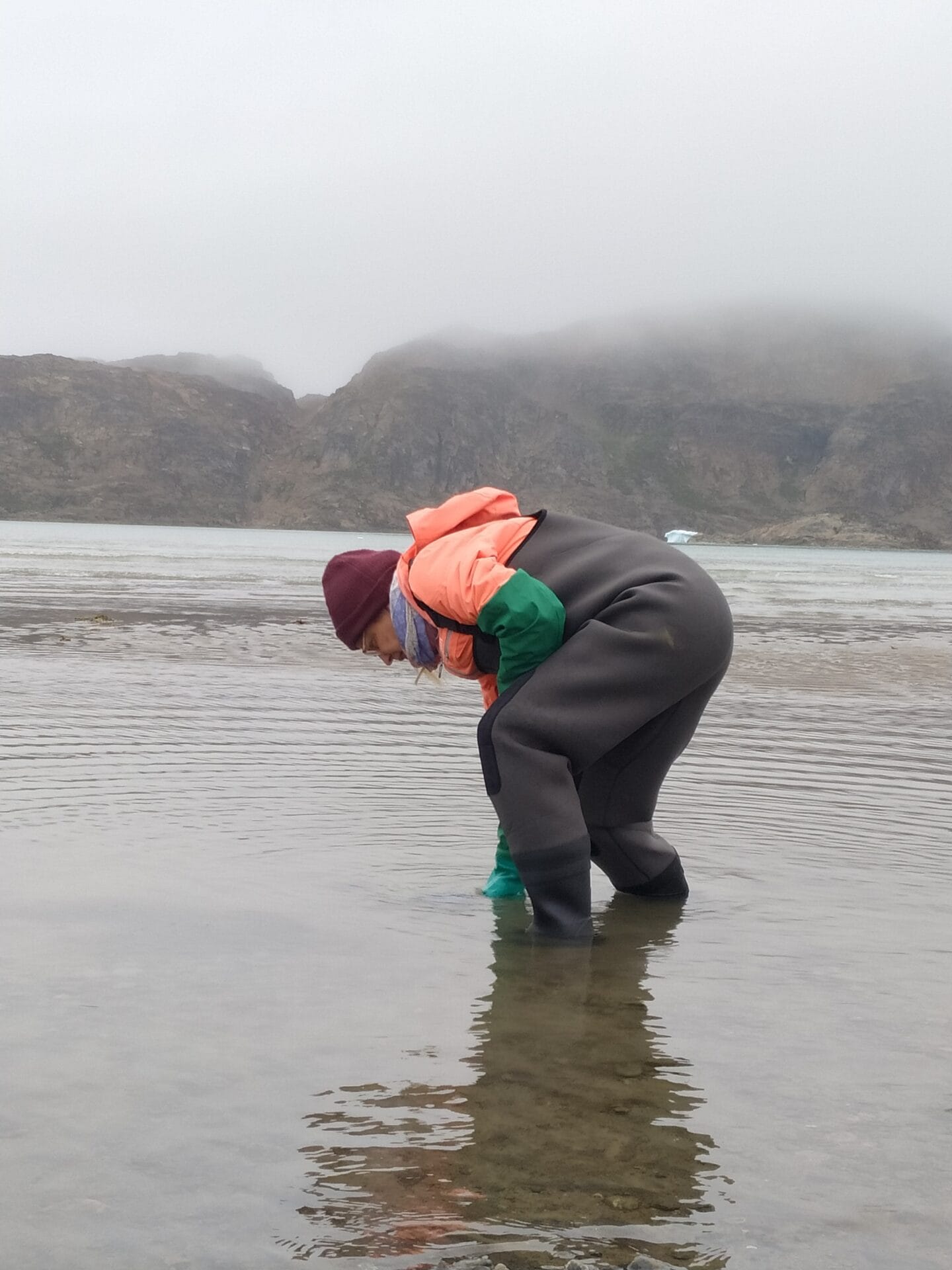
Collecting sediment on the tidal flat (© Palme)
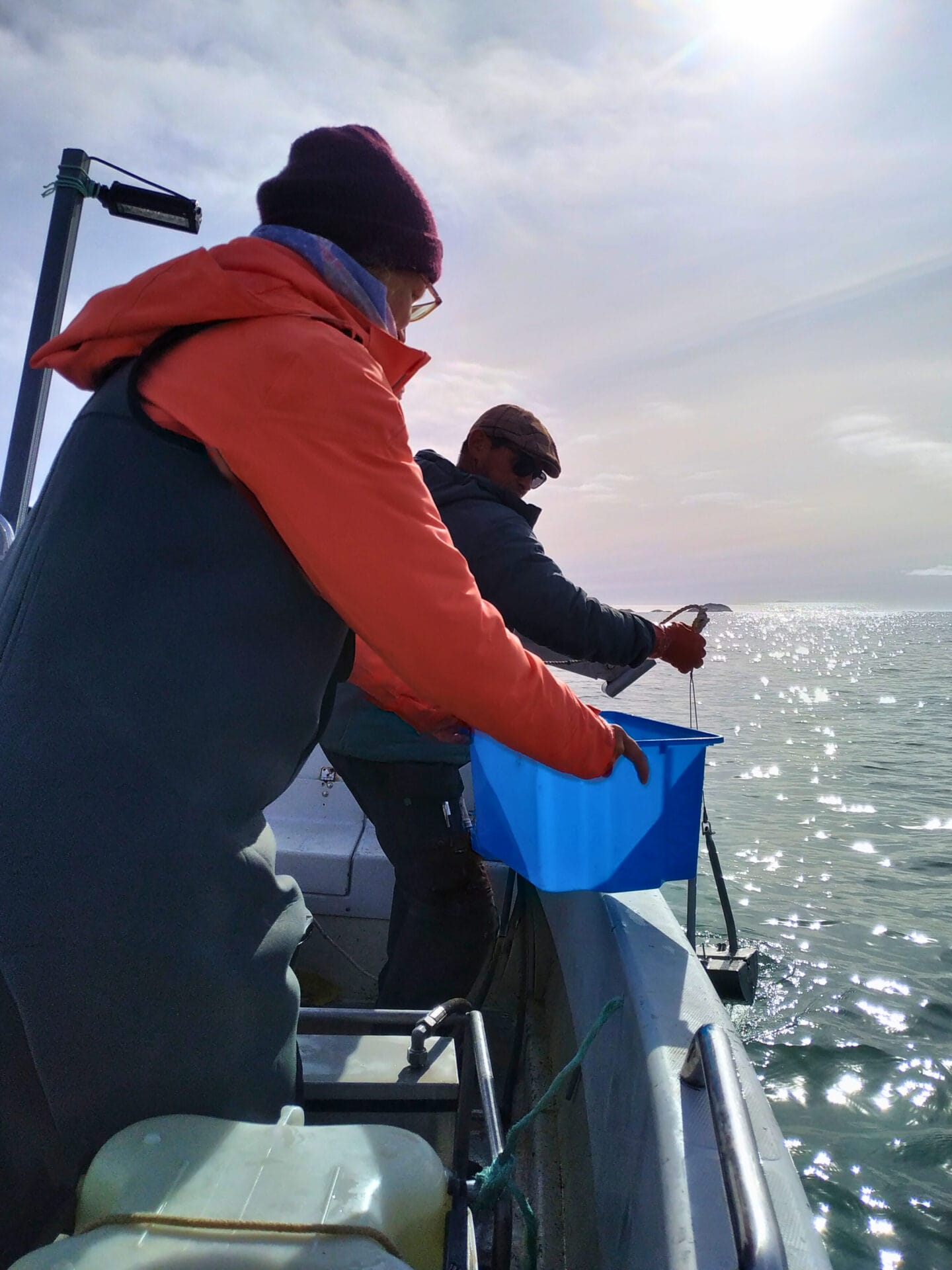
Collecting sediment from the vessel (© Palme)
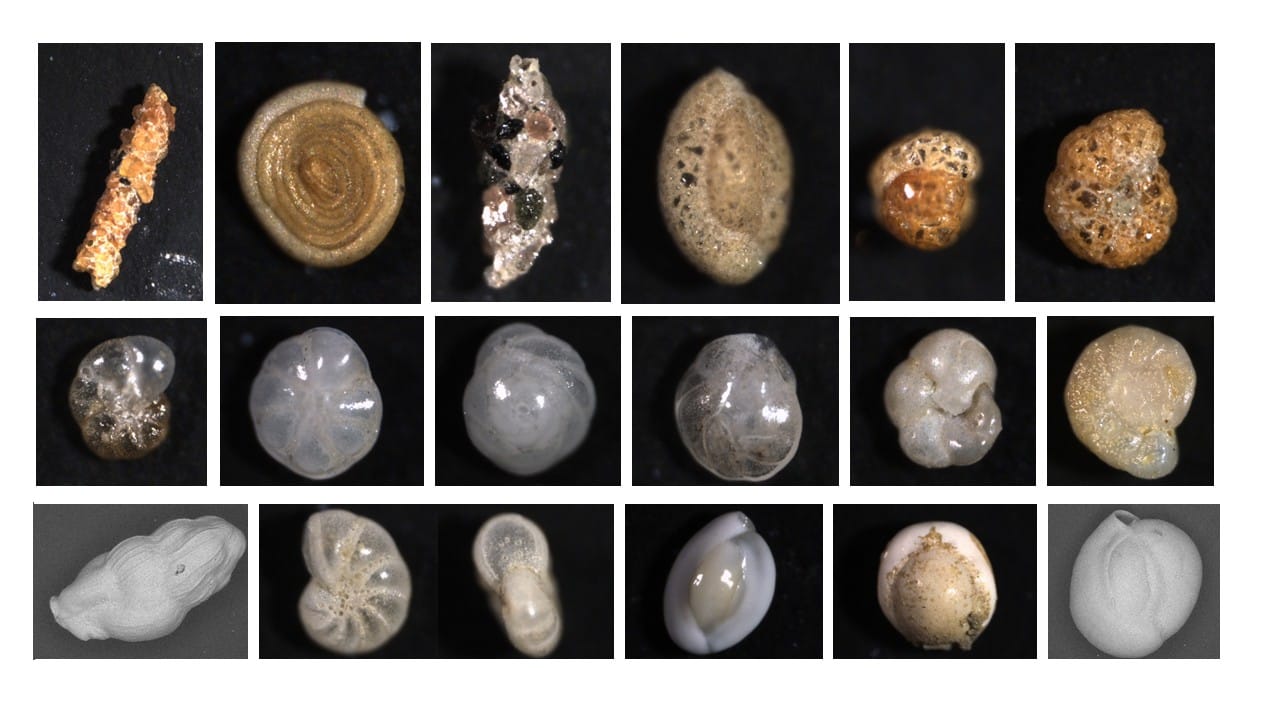
First foraminifera found at 90 m water depth (© Palme)
In November, we additionally joined an expedition to the Greenland Sea to collect new sponge samples and better understand why Arctic sponges serve as habitats for foraminifera. The expedition was carried out aboard the Norwegian icebreaker Kronprins Haakon as part of EXTREME 25. Using the deep-sea remotely operated vehicle Ægir 6000, we were able to locate and sample sponges precisely. The first foraminifera had already been identified within the sponge material on board—a promising initial finding.
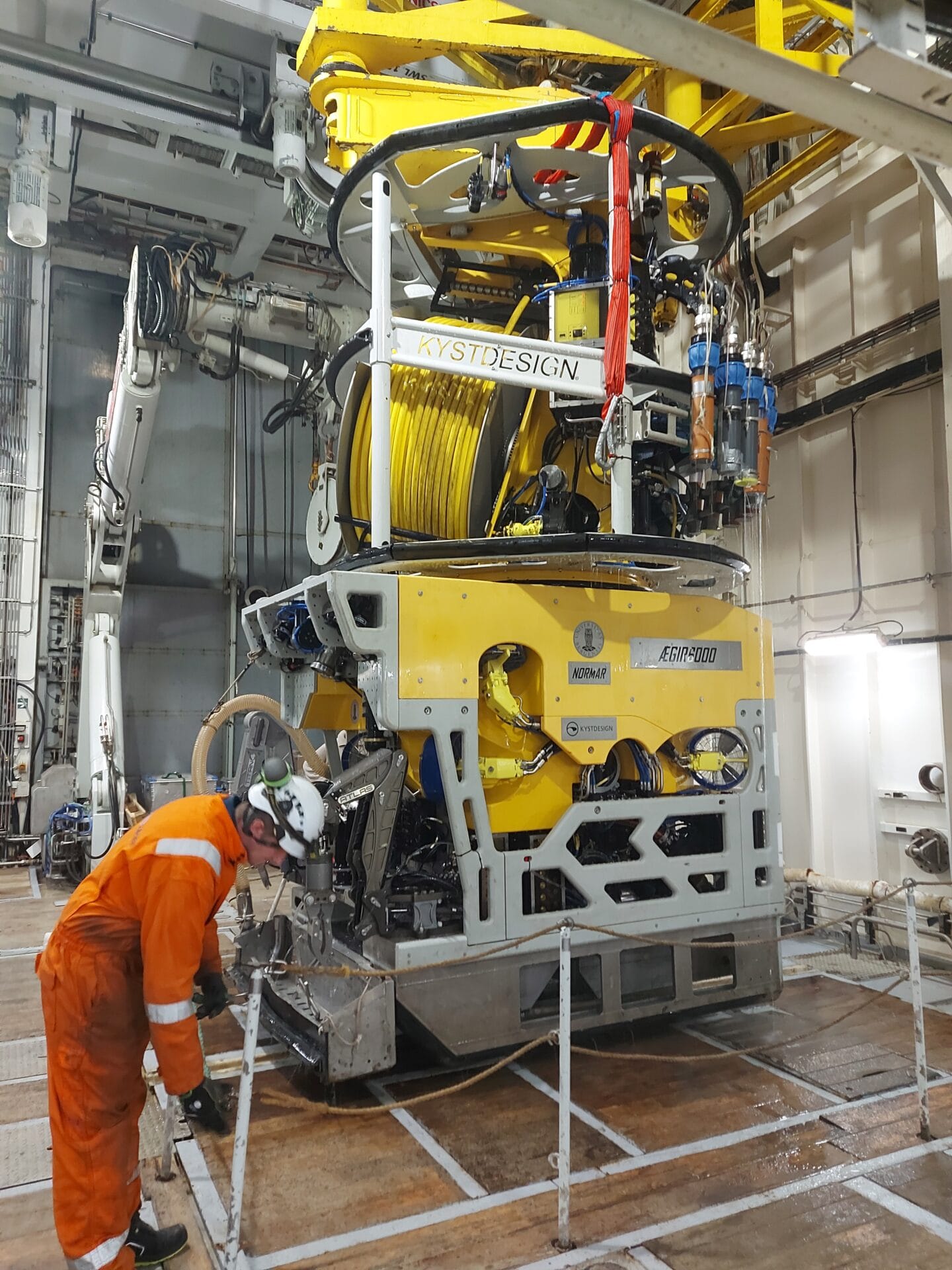
Deep-sea ROV Ægir 6000 aboard the Kronprins Haakon (© Faizieva)
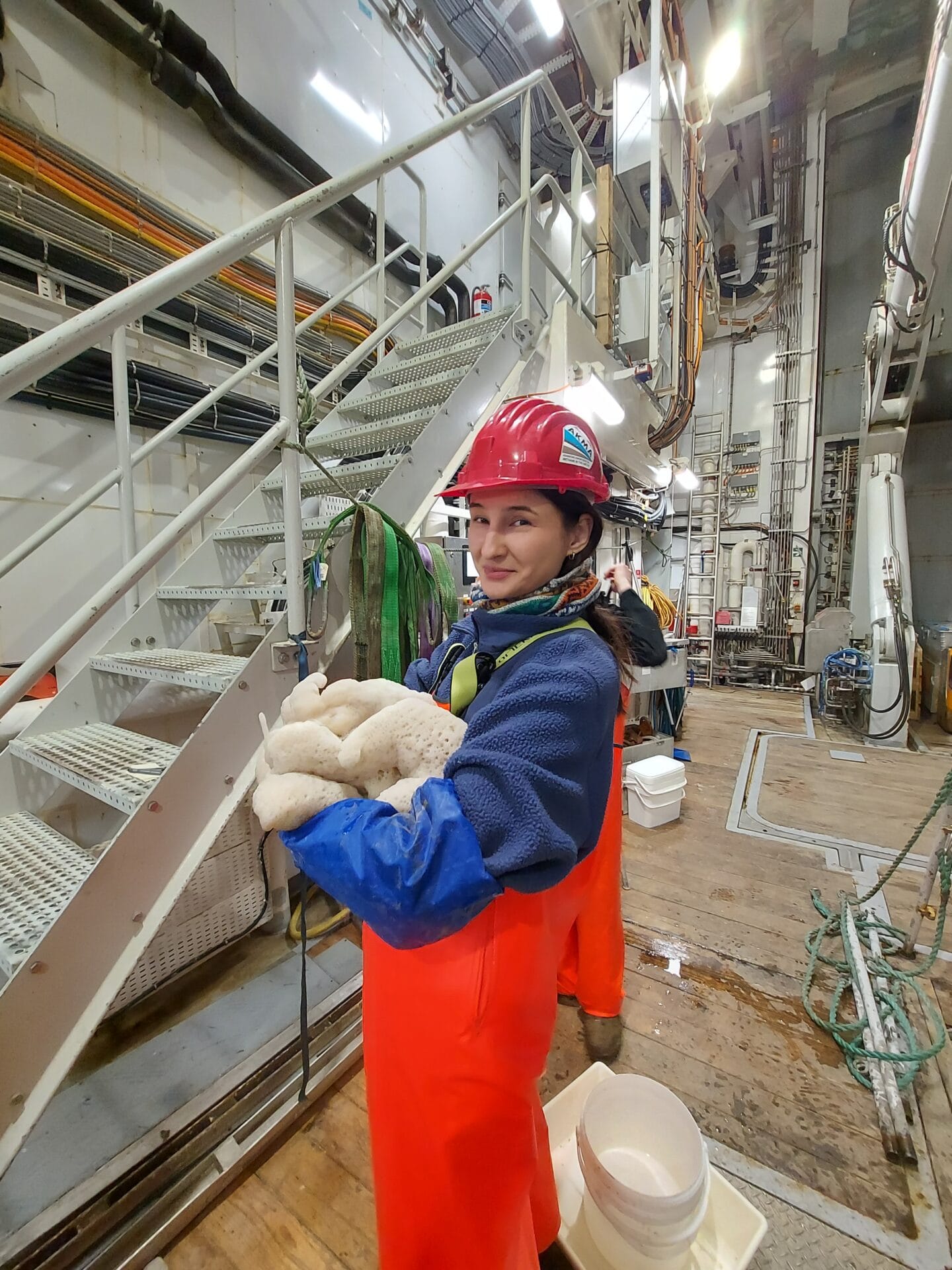
K. Faizieva with a freshly collected sponge from 3,923 m water depth (© Faizieva)
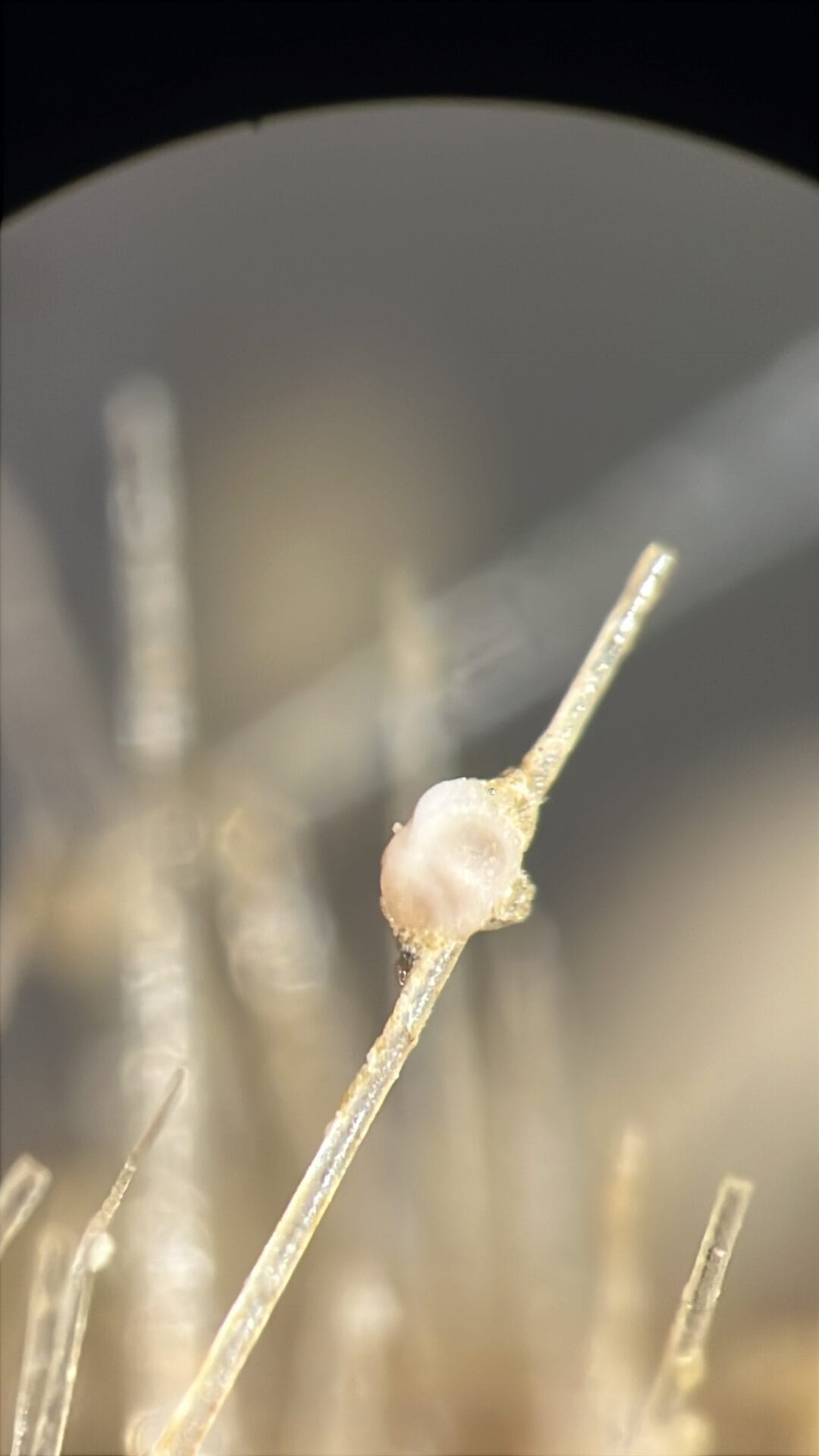
A foraminifer attached to a sponge spicule (© Faizieva)
What Remains – and Why It Matters
Foraminifera are highly sensitive bioindicators and early-warning systems for environmental changes on the Arctic seafloor.
Key findings are that Calcareous foraminifera can survive in small numbers even in cold, carbonate-aggressive waters; Sponges can serve as important habitats for Arctic foraminifera and may host previously unknown species; Benthic foraminiferal communities respond rapidly to fresh food pulses, including in the Arctic.
The foraminiferal assemblage collected at the Sermilik Research Station now provides a valuable baseline against which future environmental changes can be detected. Regular monitoring over the coming years would therefore be highly valuable, as climate change and the response of foraminifera could be followed almost in real time.
New data will also improve reconstructions of past climate change and contribute to better predictions of ecosystem dynamics and Blue Carbon feedbacks — providing an important scientific basis for the effective protection of Arctic marine habitats.
Media information
Written by Univ.-Prof. Dr. Petra Heinz.
Contact: use our contact form.
Layout by the APRI-Media Team.
Photos: title background ©Enge and thumbnail ©Faizieva.
About the scientific author
Univ.-Prof. Dr. Petra Heinz, University of Vienna.
Related articles
Julius Nielsen, Station Technician at the Sermilik Polar Research Station
Polar Talk #22 – Save the Date
Polar Talk #21 – Save the Date

The Cold Truth: Antibiotic Resistance in the Cryosphere

Polar Talk #20 – Save the Date (in German)
Polar Talk #19 – Save the Date (in German)
Literature
Bukenberger, P., Heinz, P., Wollenburg, J.E. (2020). Turrispirillina karasikensis (n. sp.) and Turrispirillina pervesleri (n. sp.) associated with large sponges on the Gakkel Ridge (Arctic Ocean). Journal of Foraminiferal Research 50 (2): 174–181. https://doi.org/10.2113/gsjfr.50.2.174
Boetius, A. (2016). Weekly reports for RV Polarstern expedition PS101 (2016-09-09–2016-10-23, Tromsø–Bremerhaven), German and English version.
Faizieva, K., Wollenburg, J.E., Nagy, M., Berndt, C., Heinz, P. (2026). Benthic foraminiferal colonization of phytodetritus during spring bloom within the marginal sea ice zone off Northern Svalbard continental margin. Scientific Reports 16:10889. https://doi.org/10.1038/s41598-026-45090-3