

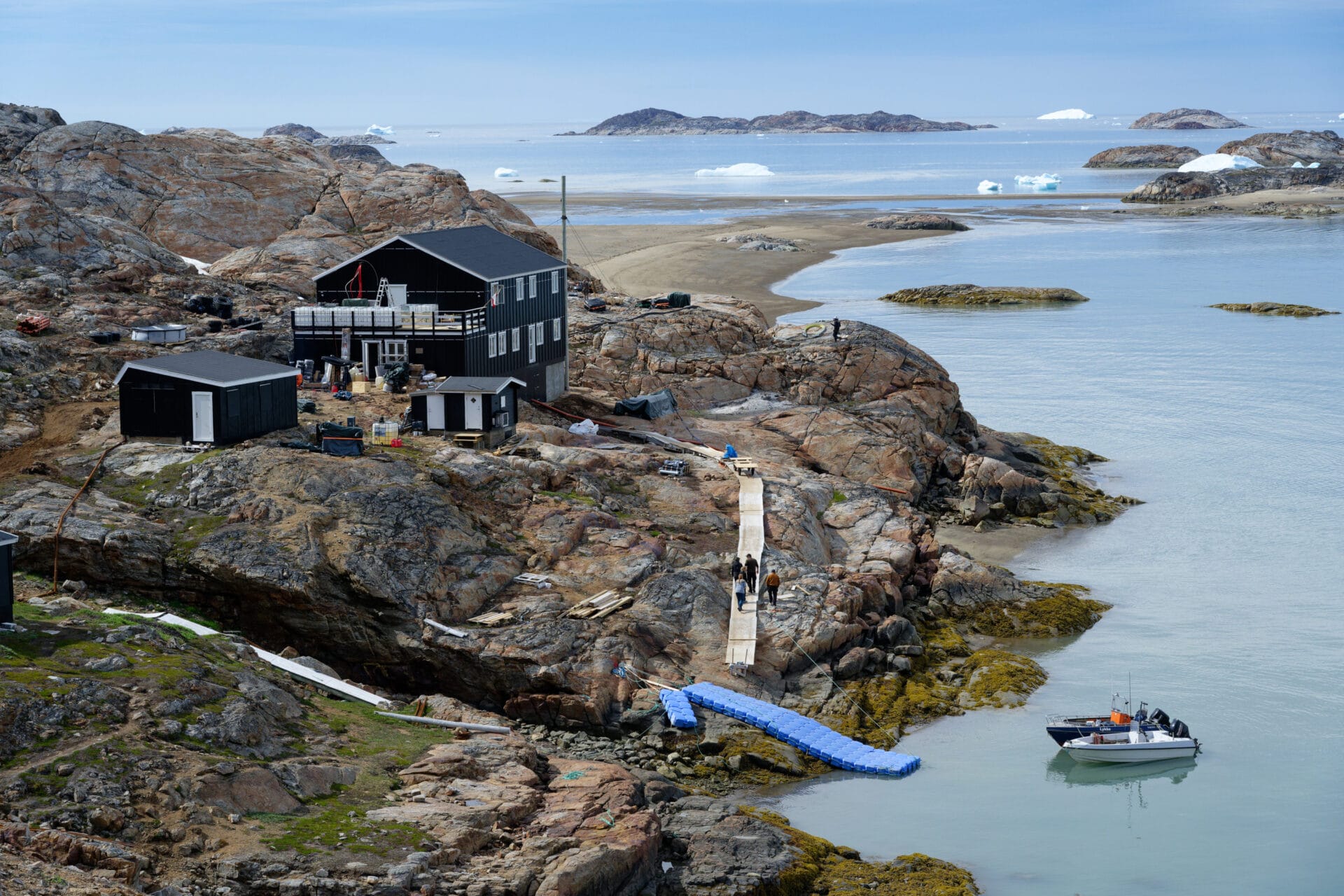
Since 2025, Julius has been the station technician at the “Sermilik” polar research station, run by the University of Graz. As an Inuk from Tasiilaq, Julius is the ideal local partner for polar research, thanks to his education as an electrician and his deep passion for nature. His enthusiasm is truly infectious!
I had the opportunity to meet Julius during my stay at the station in the summer of 2025. He gave me an insight into his daily tasks at the Sermilik station, where temperatures can be extremely low and conditions are often unpredictable. Julius emphasised how important it is to preserve these pristine polar regions while expanding our scientific knowledge. His commitment serves as a reminder of the importance of such research — not just for scientific advancement, but also for safeguarding our planet’s future.
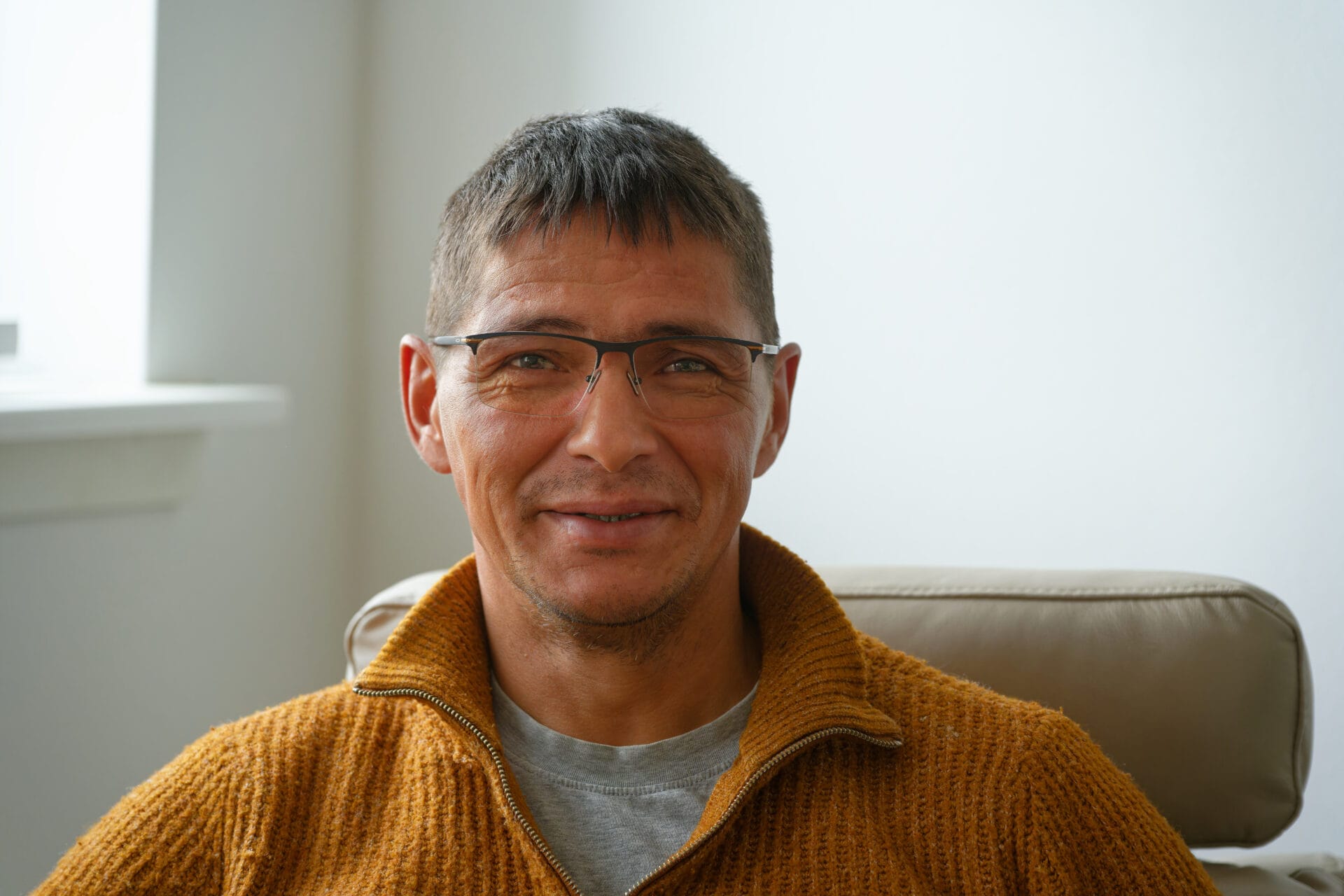
Julius Nielsen, station technician at the first Austrian Polar Research Station “Sermilik” (© Christoph Ruhsam, www.pure-landscapes.net)
Research areas at the station
Since the pre-opening of the Sermilik Station in September 2023, the station’s concept has proved highly successful. The station supports a wide range of research fields, including glaciology, meteorology, biology, chemistry, marine science and the social sciences. Near the station, researchers have already studied the diversity of lichens and mosses and investigated fungal infections in plants, particularly willows, and discovered a previously unknown species of lichen, which will be the subject of further research by the University of Graz. A fundamental principle of the station is close and respectful cooperation with the local population, both for current and future research projects. For example, in the interdisciplinary research project Snow2Rain, new and diverse types of knowledge about environmental change were generated for the benefit of the people of Tasiilaq by combining the strengths of the social and natural sciences.
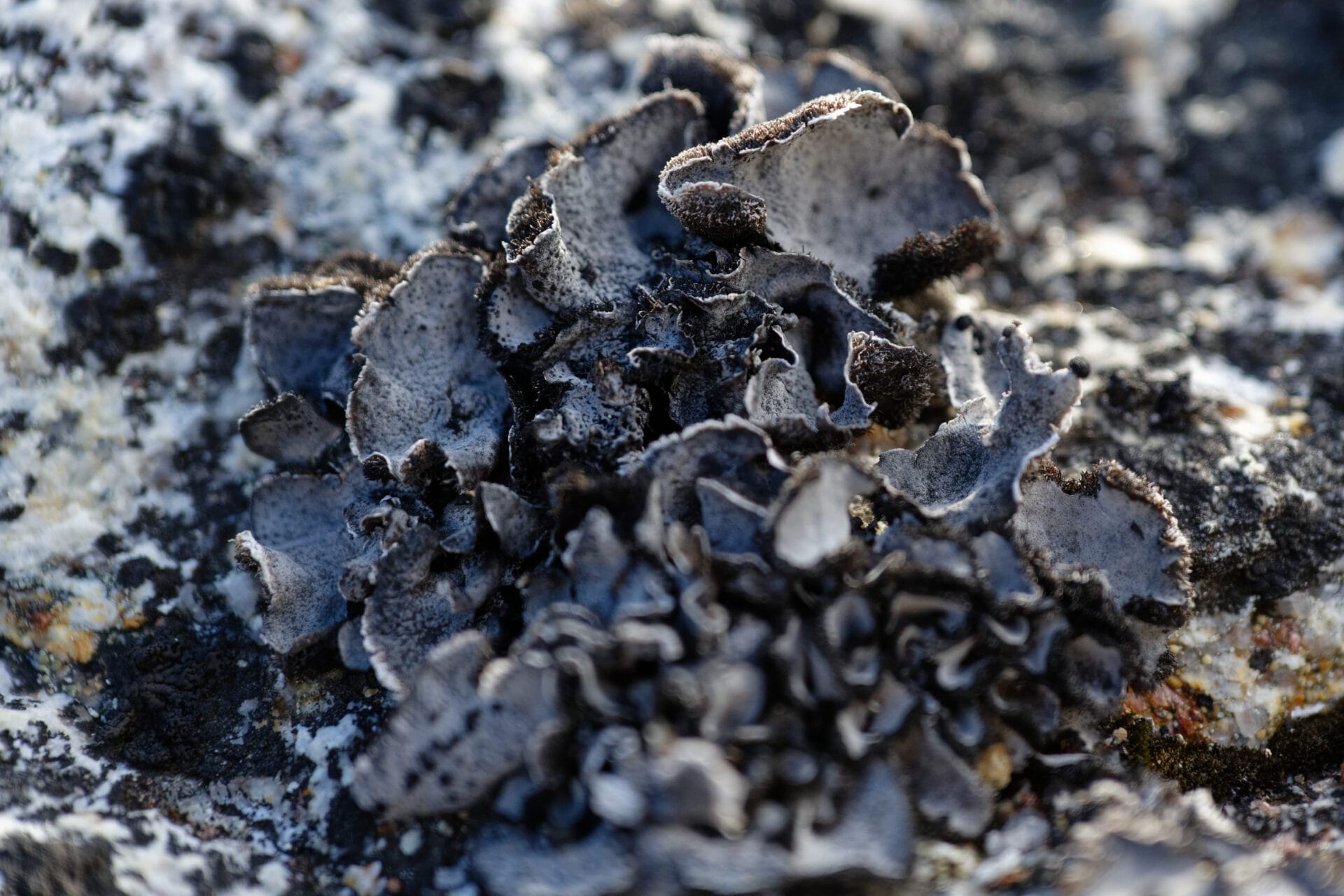
Collecting lichen close to the station (© Christoph Ruhsam)
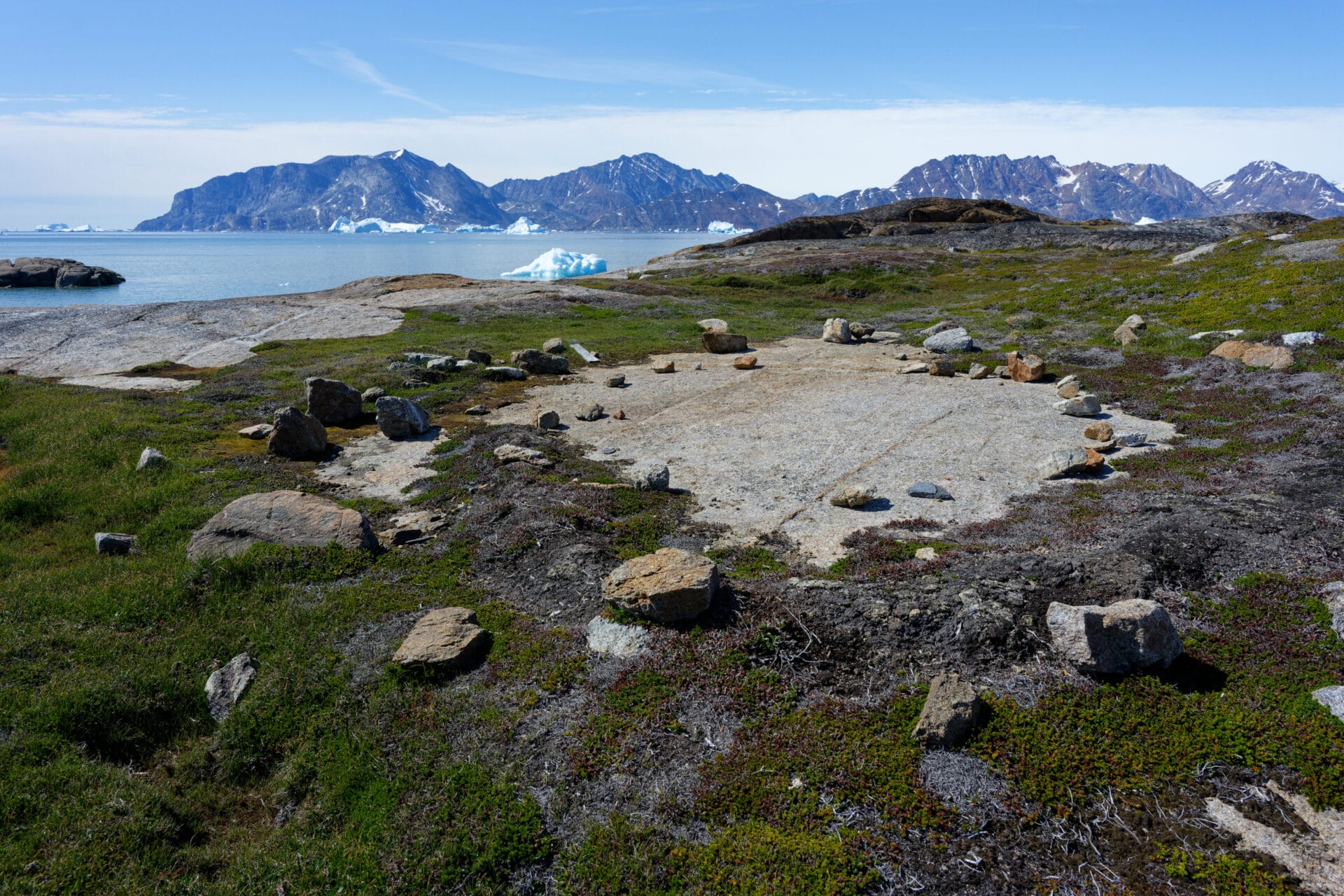
Ancient Inuit summer tent stone ring on an island reachable only at low tide (© Christoph Ruhsam)
A first meeting with a sense of déjà vu
I first spoke to Julius whilst we were loading supplies at the helipad in Tasiilaq. During our conversation, he briefly mentioned that he had been born in Tiniteqilaaq – or ‘Tinit’, as the locals call it – and had spent his early years there before moving away at the age of 12. His name, his approximate age and the name of the village where he had grown up caught my attention. During a private trekking expedition in 1990 with my wife and a friend, we passed through Tiniteqilaaq and pitched our tents on the sheltered coast outside the village. Two curious boys rowed over to us in a small wooden boat and watched us. Using a few Greenlandic words from a dictionary, I asked for their names. “I’m Christoph. What’s your name?” The older one, Julius, answered first, and they sat down next to me on a grassy slope. On that beautiful late summer evening, we communicated with gestures whilst looking for someone with a boat who could take us across the narrow sound to the main island of Ammassalik.
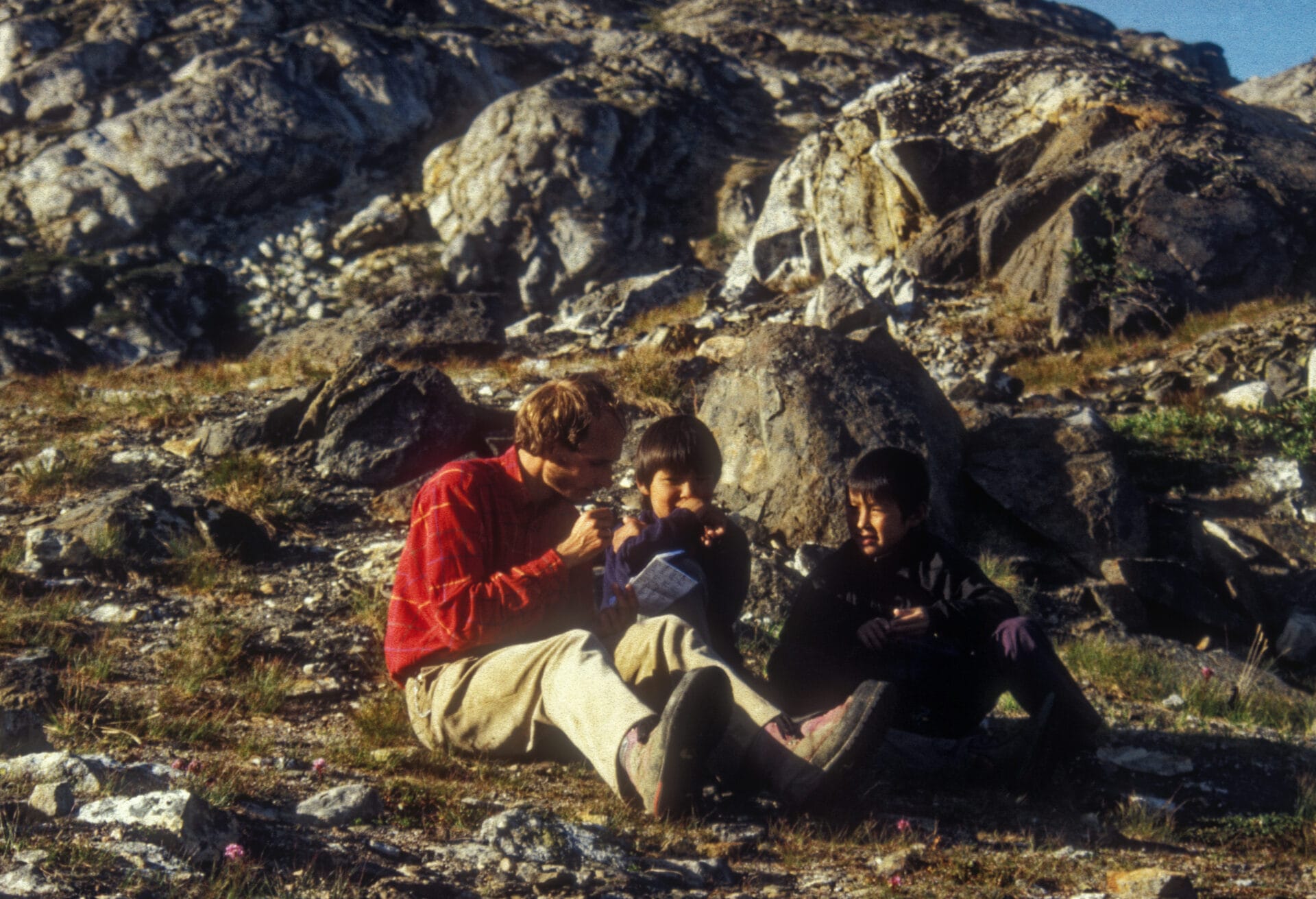
Gesturing with Julius, Tiniteqilaaq 1990 (© Christoph Ruhsam)
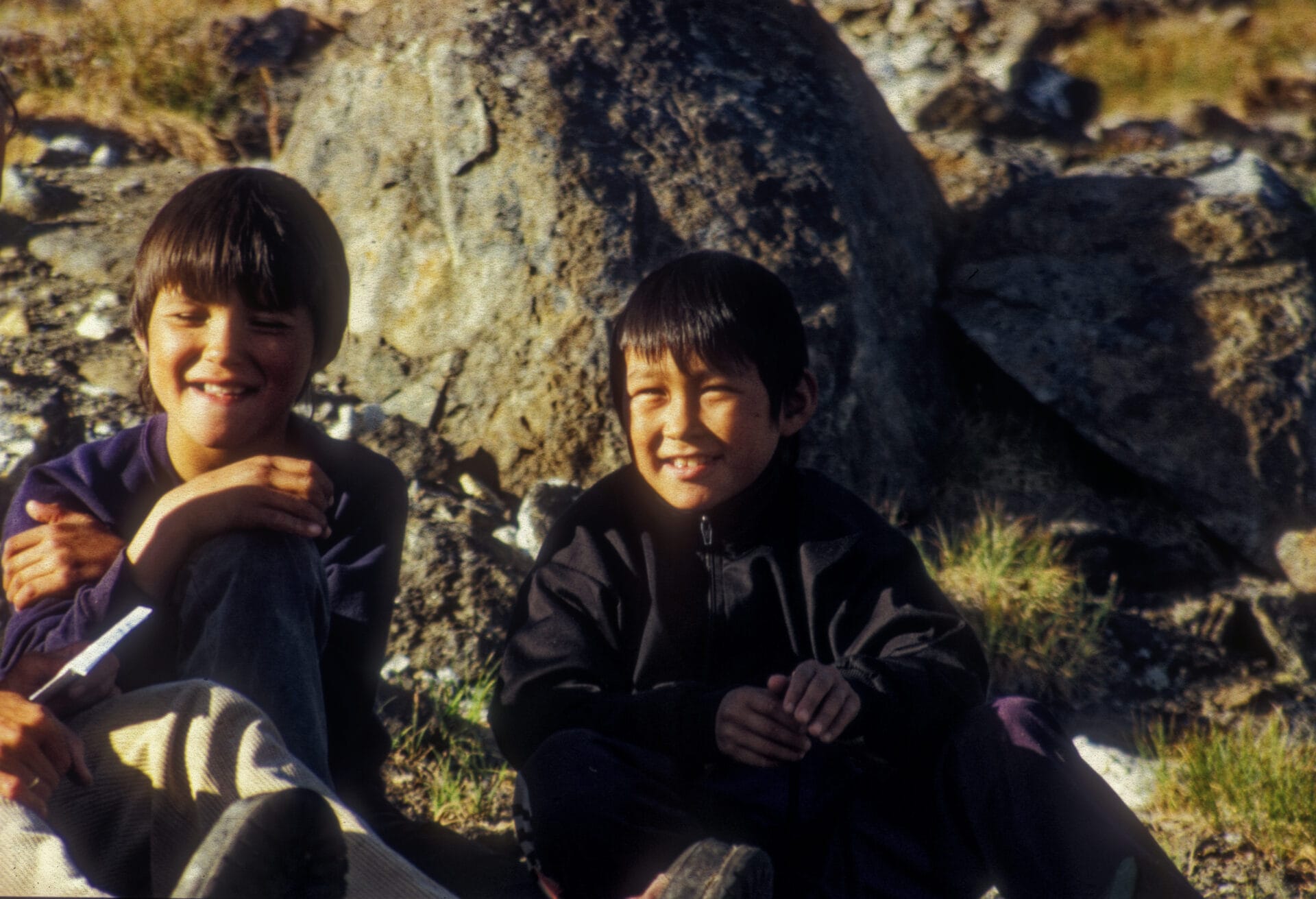
Julius 1990 (left) (© Christoph Ruhsam)
Could this be ‘the’ Julius from 1990? I asked my wife to send me a particular photo from the slides of that time. When Julius saw the photo on my mobile, his expression showed surprise and joy as he recognised himself as the boy he had been in 1990. I could hardly believe that it was really him, now working as a station technician. For me, it was one of those incredible experiences that life sometimes has to offer.
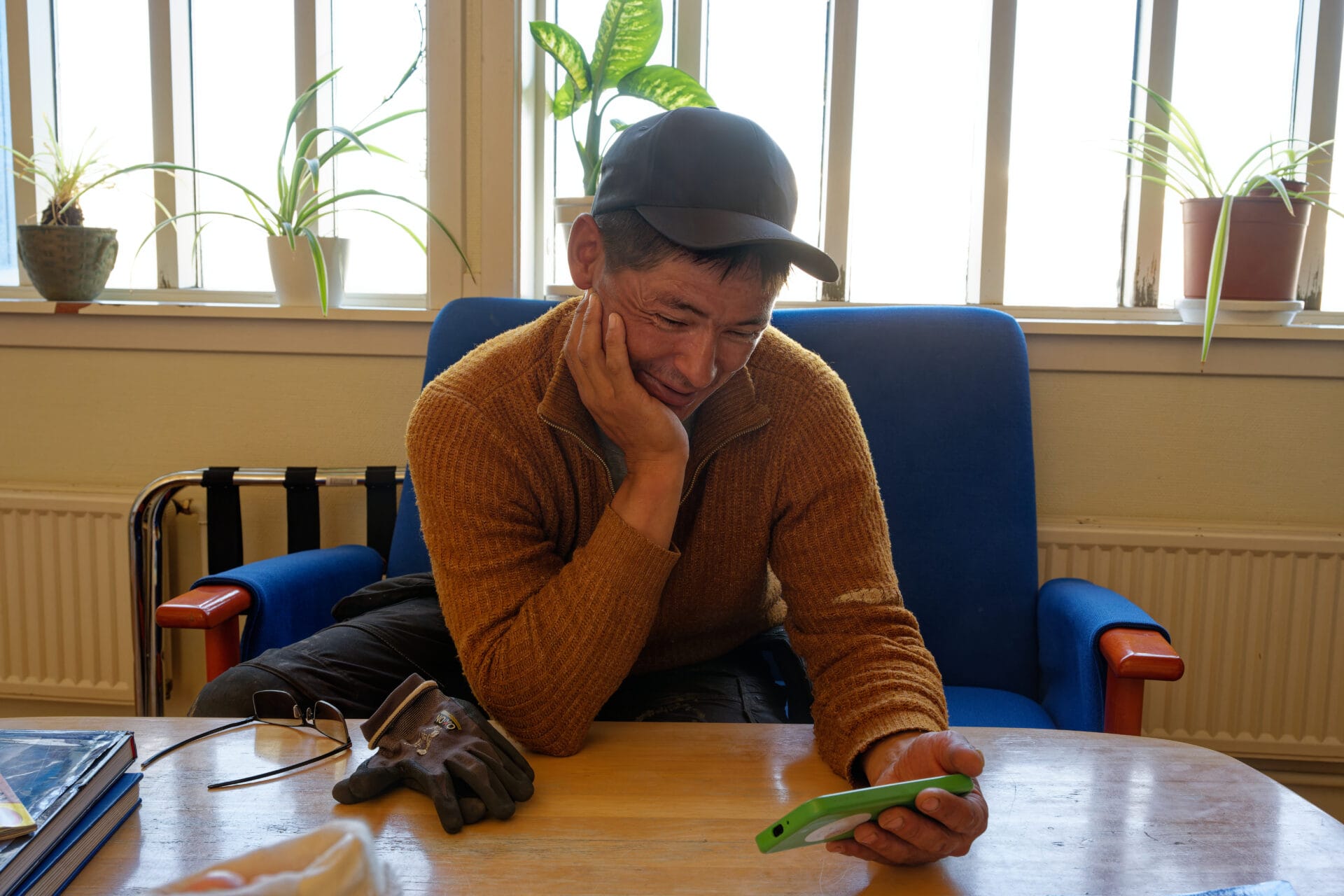
Julius recognizing himself on the photos from 1990 (© Christoph Ruhsam)
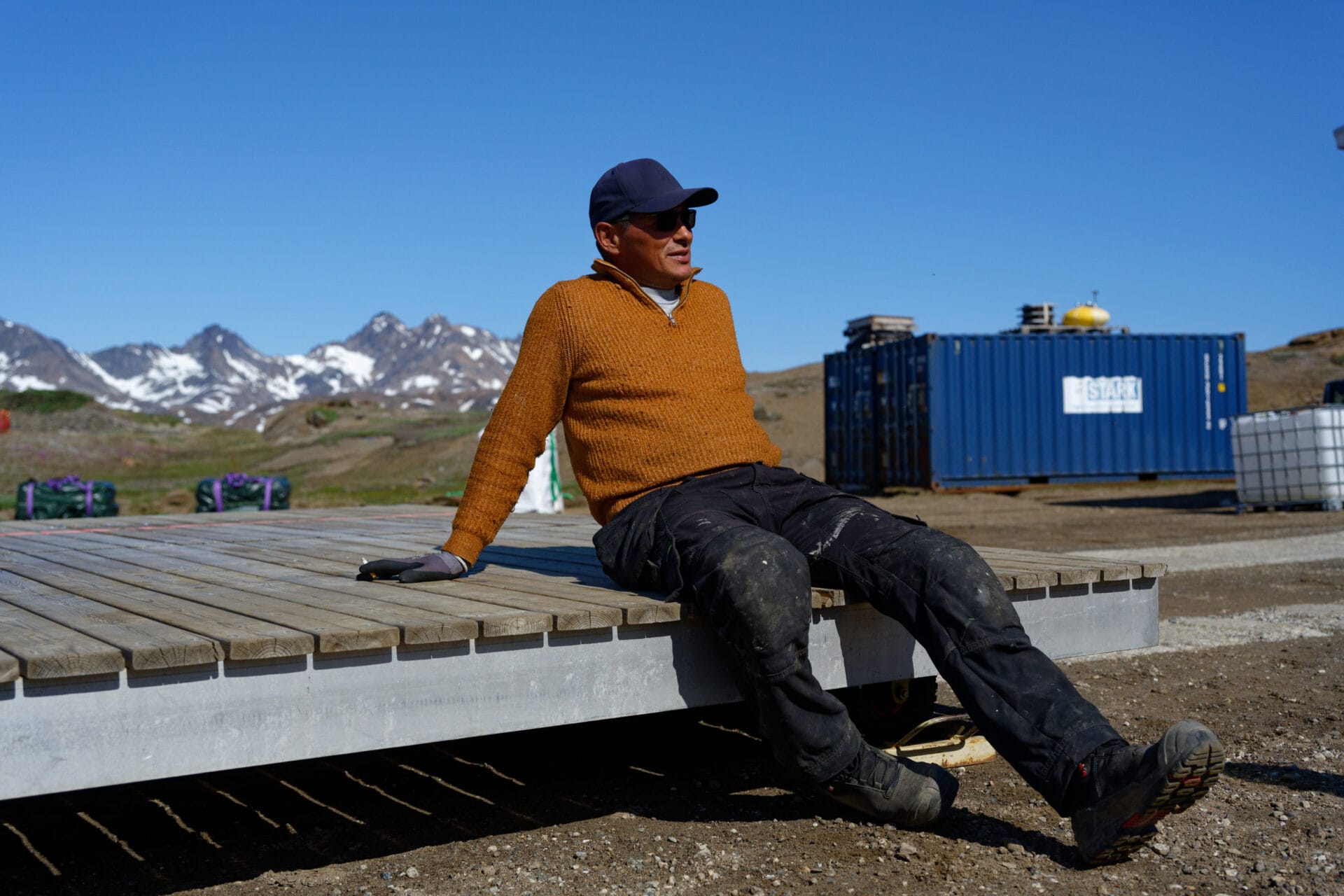
Julius at the heli landig pad, Tasiilaq (© Christoph Ruhsam)
The interview
I asked Julius for an interview about his motivation and hopes for the station.
Interview with Julius Nielsen, Inuit station technician of the first Austrian polar research station “Sermilik” (© Christoph Ruhsam, www.pure-landscapes.net)
Related dates:
From 27 to 29 May 2026, the workshop ‘The Sermilik Station from an Arctic Perspective’ will take place at the University of Graz. Full programme and registration here.
Julius is featured in the permanent exhibition ‘Science in Transition’ at the Vienna Technical Museum, in the section on polar research, with an image and an audio station featuring the interview. You are warmly invited to visit the museum!
Julius: I’m Julius Nielsen, 47 years old, born in Tinit, now living in Tasiilaq with my second wife and my youngest son. The Nielsens were a renowned hunting family in Tinit. I left Tinit as a teenager to finish the public school in Tasiilaq. Then I moved to Denmark for a year to learn and improve my language skills.
APRI: How did you achieve your professional education as an electrician?
Julius: I moved to the Greenlandic capital Nuuk in West Greenland for the education as an electrician. This lasted for almost 5 years including some time in Denmark. Then I gained over 3 years of experience in that profession in Nuuk before I moved back to Tasiilaq, working as an electrician at a building company.
APRI: Tell us more about your connection to the Sermilik station and how you applied for the technician job?
Julius: In 2006, I made the decision to leave my job in the building industry and seek out something that better reflected my true identity: working in nature. I started fishing and hunting. I also started working as a tourist guide. But I had to improve my English. That way I could spend more time working in tourism. The income was not always sufficient, so I also worked as a universal technician at different companies to keep my economy going. I worked as a coordinator and safety guide for a mining company in Northeast Greenland. For the last two years, I was working on a Greenlandic company’s trawler as a fisherman. For many months, I was working in Svalbard, far from home. This included working on the film set for “Mission Impossible”, filming the key sequences involving a CIA listening station. These scenes were shot in search of a missing submarine. This was very exciting and interesting, but the recent birth of my youngest son meant that I had to find a job closer to my family.
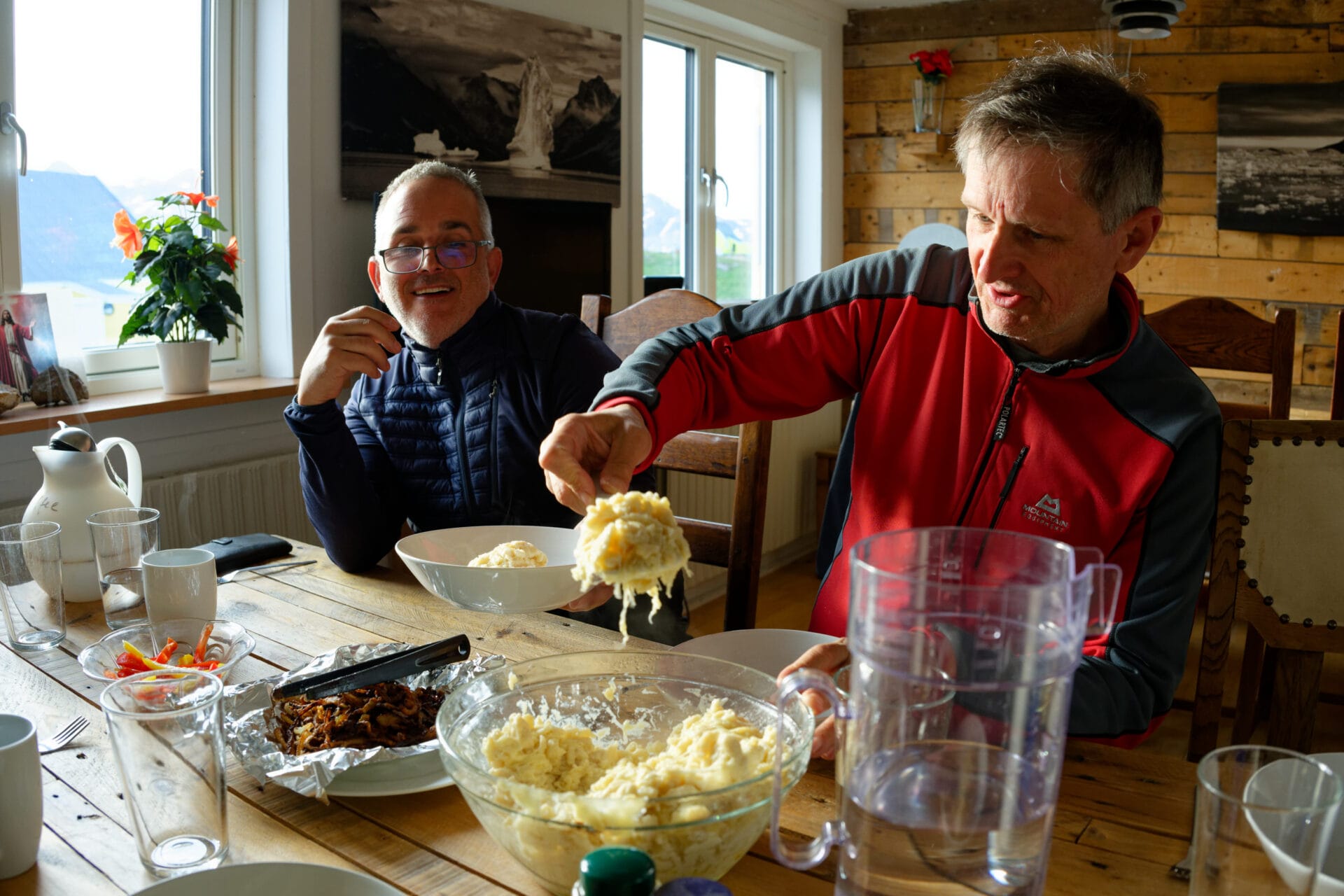
Robert Galovic (technical lead) and Prof. Wolfgang Schöner (initiator of the station) (© Christoph Ruhsam)
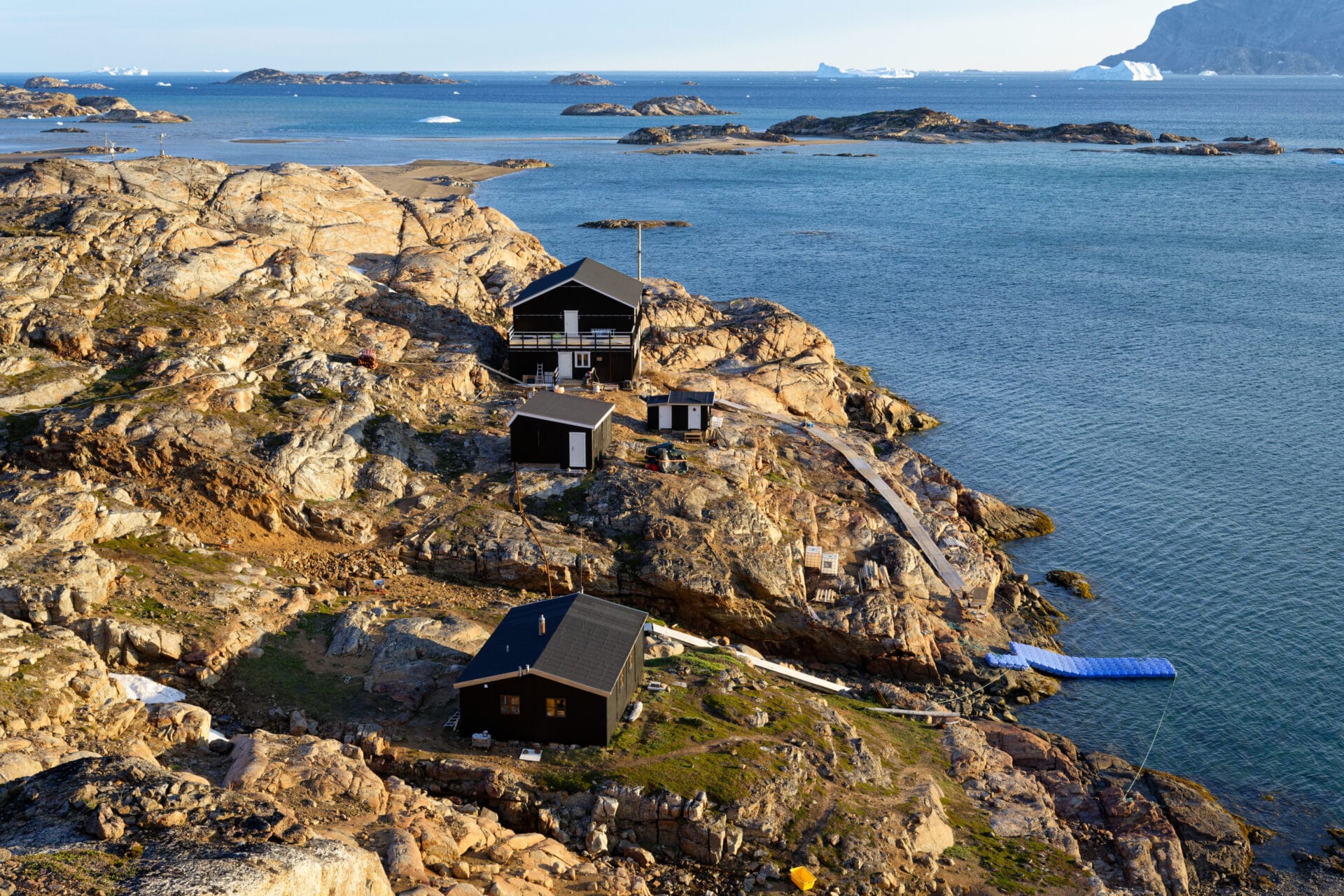
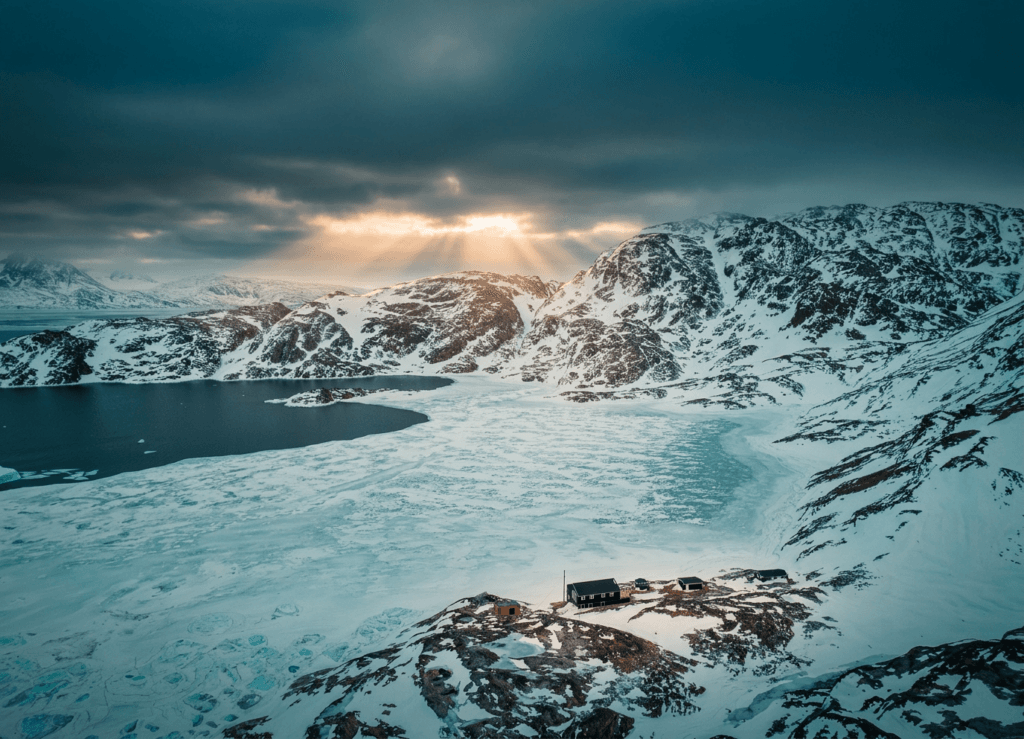
Sermilik research station (© Christoph Ruhsam)
I had known about the Sermilik Station for many years, but I did not know what was going on there. In 2024, Line, a Danish tourist guide from Tasiilaq who provides boat services to the station’s researchers, informed me that the University of Graz was looking for a station technician. She introduced me to the initiator of the station, Wolfgang, and the technical key planner, Robert, who are both from the university. We had some communication, after which Wolfgang convinced me to apply for the job, which I did more out of curiosity than seriously expecting to get it. I was selected. This made me more and more interested in the research. I also wanted to know how I could operate the station. My wife is very happy about it, as it means I can now be with the family for longer, because I don’t have to be permanently stationed there.
APRI: Can you explain more about your tasks at the station?
Julius: Well, that will evolve over the coming years as more research is carried out. I certainly have to prepare the station in spring before the first researchers arrive. During the main research season, I will be responsible for ensuring a sufficient water supply from the surrounding brooks and snowfields, and a sufficient electrical supply from photovoltaic panels feeding a large battery bank. If that is not sufficient, I will also ensure that the backup diesel generators are working properly. If something breaks, I will have to locate the issue and either repair it myself or coordinate the repair with professionals in Tasiilaq. Having my own boat gives me the flexibility to arrange for spare parts and talk in person with companies in Tasiilaq. I have to prepare the rifles for polar bear protection and ensure they are kept in good condition. If researchers require assistance or specialised tools unavailable at the station, I will also be the first point of contact. Before the winter season starts, I have to prepare the whole station for winter: drain the pipes, reduce energy consumption, and ensure the heating system is working.
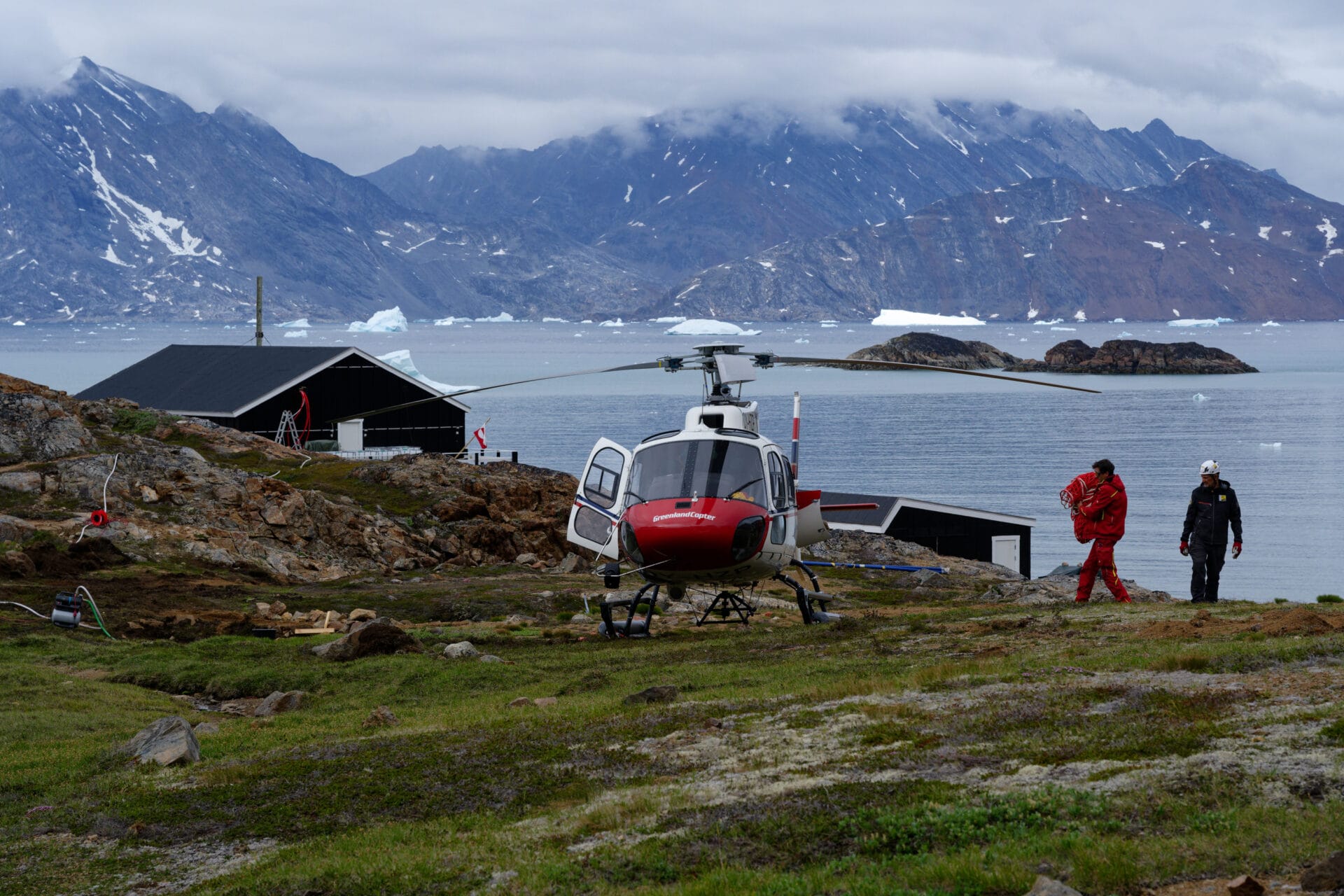
Heli landing at the station (© Christoph Ruhsam)
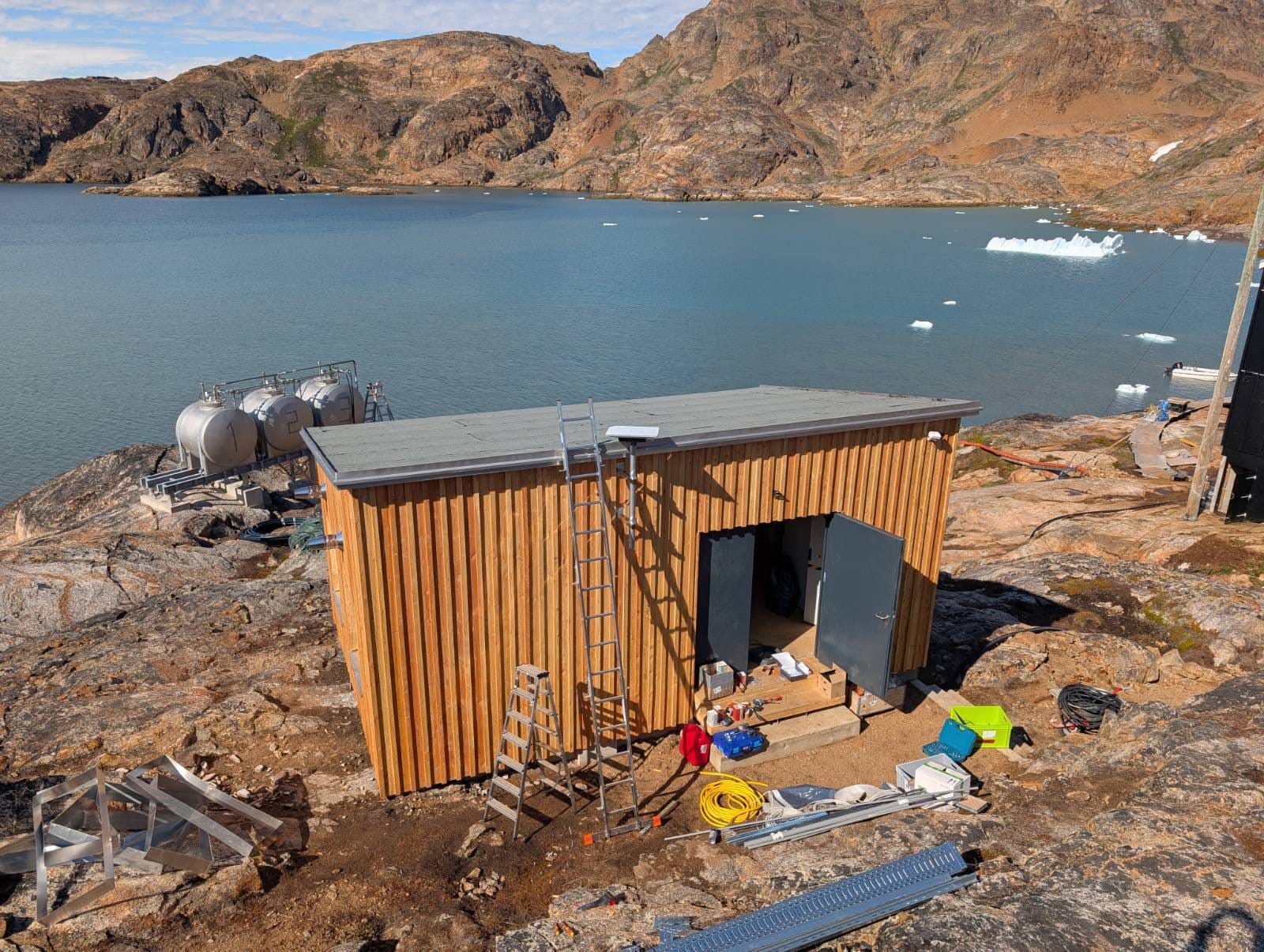
Power house completion work at the Sermilik research station (© Company Baltl)
“Being out in the Arctic nature is my identity. I have my own dog sled team. Eight to fourteen dogs are ideal for travelling across the island to the station.”
Julius Nielsen
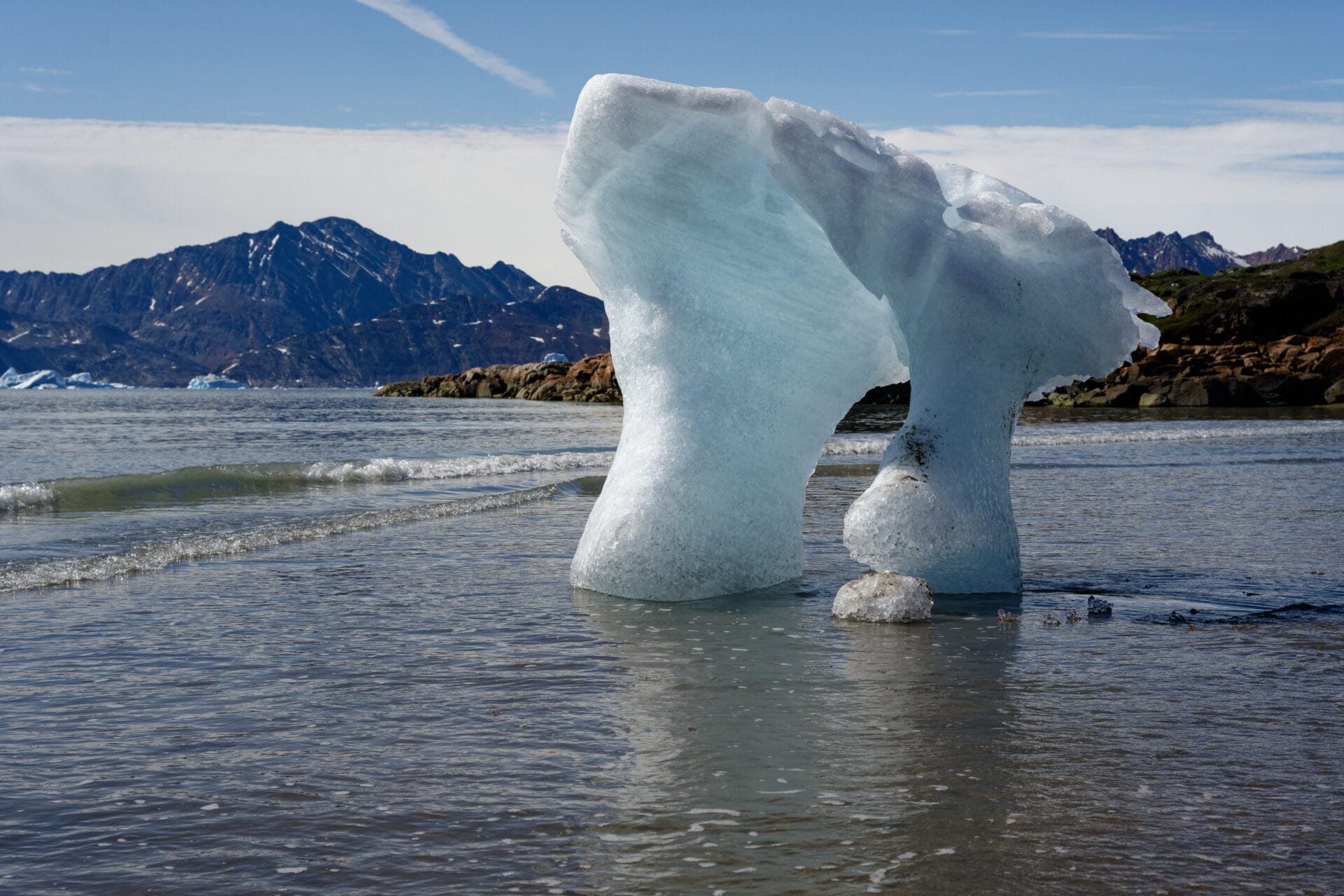
A chunk of ice washed up on the beach near the station (© Christoph Ruhsam)
APRI: Why are you part of the completion working group?
Julius: It is very important to be part of the team in order to learn from the professionals about the installed devices, the location of the pipes and cables, and how the various pieces of equipment work. While my electrical education and experience provide a solid foundation, it is my lifelong experience of the Arctic’s nature, weather, sea currents, and ice conditions that will be also of high importance. For instance, I can advise researchers on the best way to reach the station and act as a guide when needed.
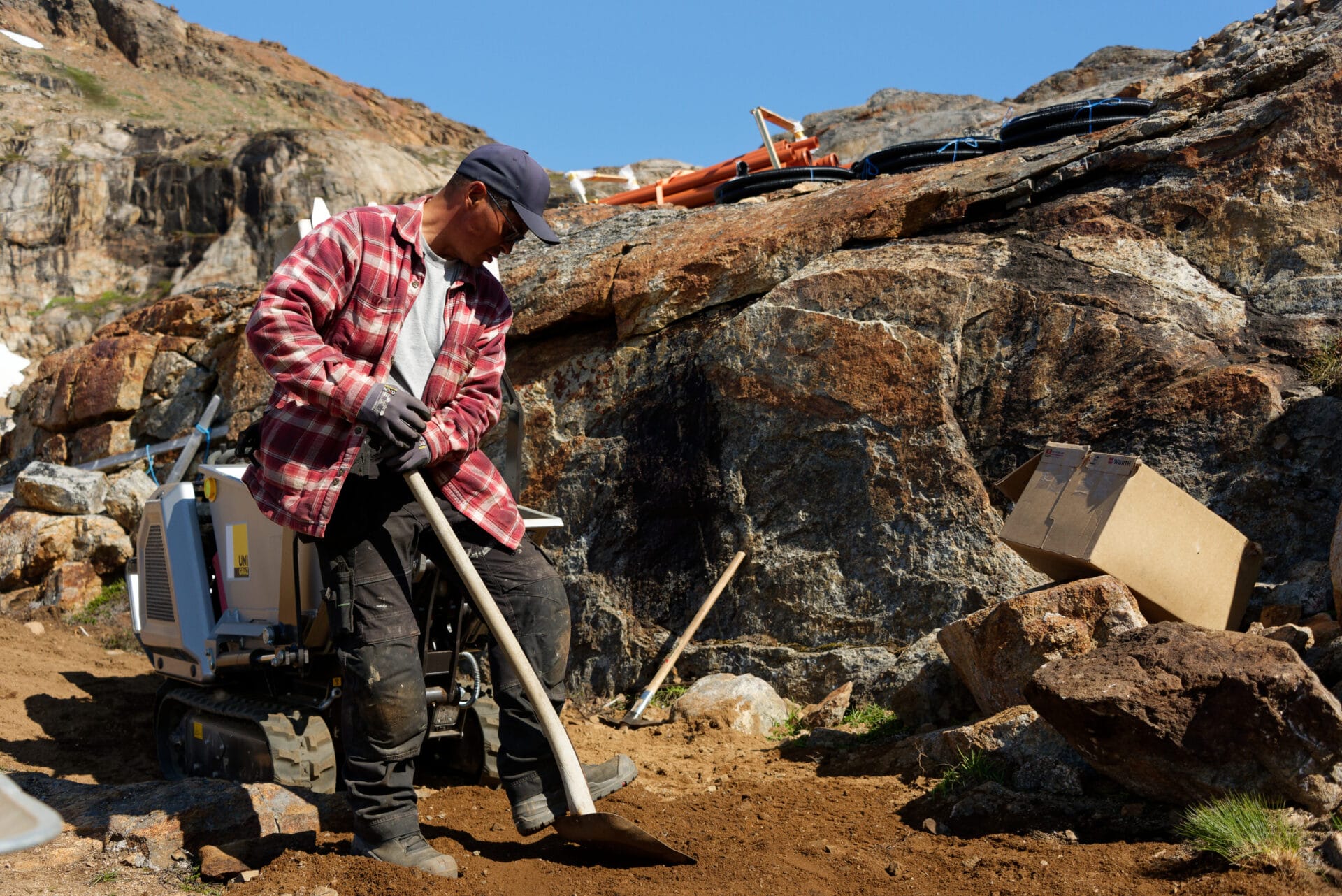
Julius @work at the station (© Christoph Ruhsam)
APRI: What could be the most difficult situations for you at the station?
Julius: The most serious situations will certainly be when human lives are in danger due to accidents or polar bear attacks. Polar bears inhabit the Sermilik fjord year-round. However, the likelihood of encountering them at the station is low. They are afraid of humans, are excellent at hiding and are real professionals at hiding underwater and behind ice floes. Nevertheless, the researchers must remain cautious. In winter, polar bears could damage the station while the researchers are away.
There could also be technical issues that I cannot fix by myself, or that go beyond what local professionals can solve.
The station’s water supply must be drained from the pipes before winter to prevent freezing-related damage. The electrical supply that feeds the batteries needs to keep the station’s critical infrastructure above freezing during the winter. However, the technical complexity is high and may require short-term inspections and fixes. This is the most interesting part for me.
APRI: Do you have a personal wish for the station?
Julius: The local community has always found it difficult to understand what the researchers have been doing at the old Danish Sermilik station for so many years. “What are they doing here?” “What is so interesting?” “Is it rocks and mining?’
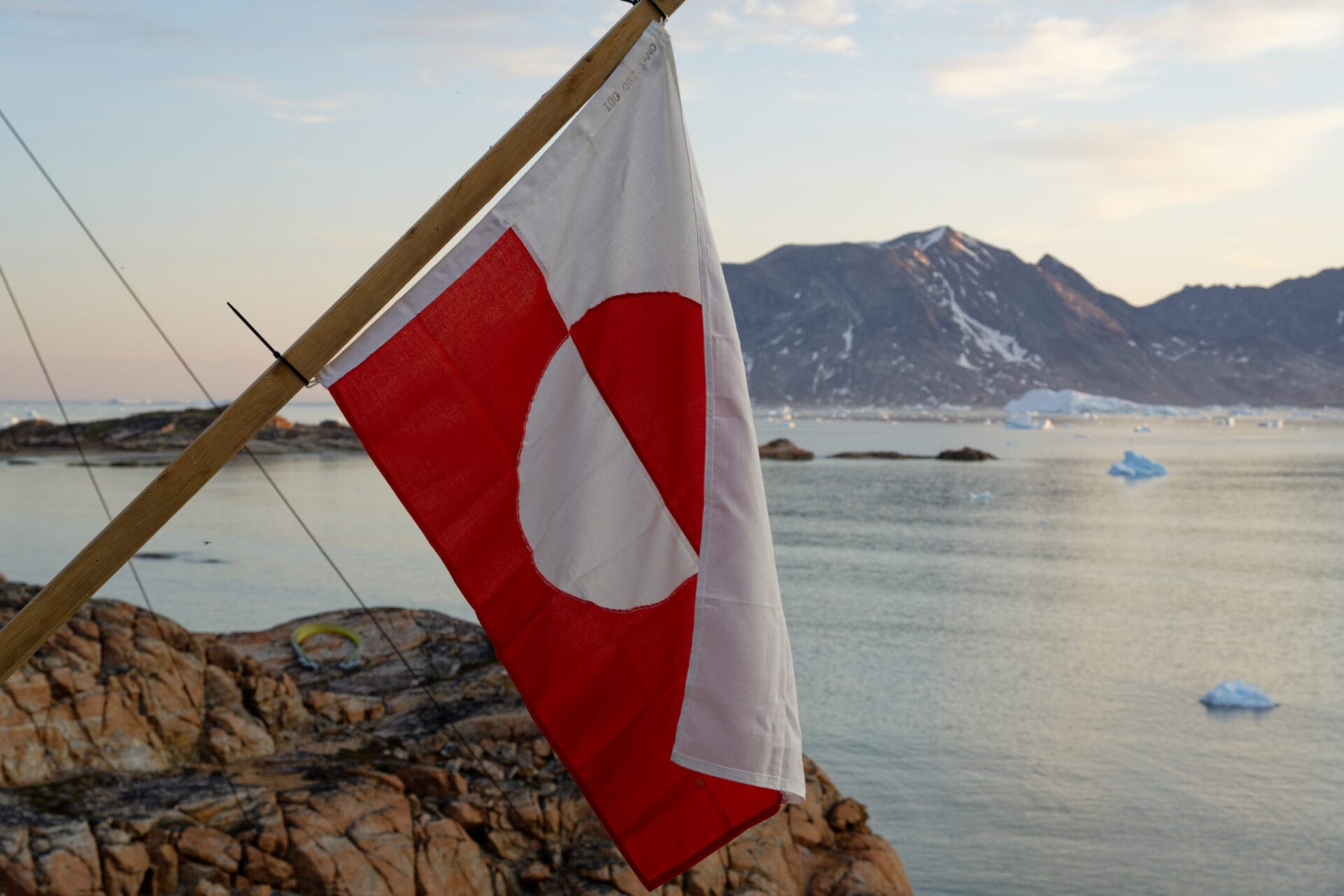
View from the station terrace (© Christoph Ruhsam)
I hope that in the future there will be a better communication with the local Inuit community. They have the right to understand what is being done. Children will open their eyes and receive a better education. All generations of the Inuit should understand what science does, what insights it provides, and how the locals can benefit from it.
Media information
Written by Christoph Ruhsam, APRI Media Officer.
Contact: use our contact form.
Photos, when not stated otherwise: © Christoph Ruhsam, www.pure-landscapes.net
Related events
From 27 to 29 May 2026, the workshop ‘The Sermilik Station from an Arctic Perspective’ will take place at the University of Graz. Full programme and registration here.
Julius is featured in the permanent exhibition ‘Science in Transition’ at the Vienna Technical Museum, in the section on polar research, with an image and an audio station featuring the interview. You are warmly invited to visit the museum!
Related articles
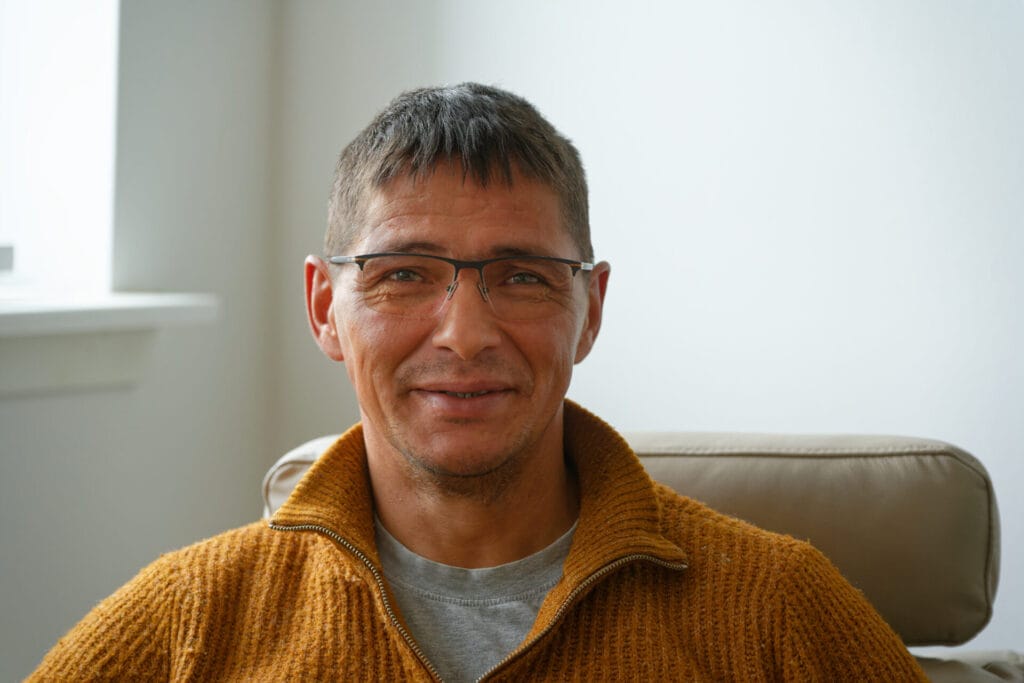
Julius Nielsen, Station Technician at the Sermilik Polar Research Station
Invitation to the Sermilik Workshop

Research Expedition to the Sermilik Station: How Eduard Orel’s Great-Great-Grandson is Learning Polar Research

Pre-opening of the Austrian Polar Research Station “Sermilik”

Construction phases of the Austrian Polar Station Sermilik