

Glaciers are among the most visible indicators of climate change and their retreat is progressing worldwide. Today, March 21, marks the first-ever World Day for Glaciers proclaimed by the United Nations. This day of action aims to highlight the central role of ice and snow in the climate system and the water cycle.
The ongoing loss of glaciers is a global signal with far-reaching consequences. On the occasion of this day of action, the present article provides a concise overview of key developments: First, it offers an overview of global changes and the importance of glaciers as freshwater reservoirs. It then turns its attention to the Arctic, where the effects of change are particularly evident and where processes are taking place that significantly influence the global climate system. Finally, the Austrian research station in Sermilik Fjord in East Greenland is used to illustrate how targeted on-site research can contribute to a better understanding of these changes.

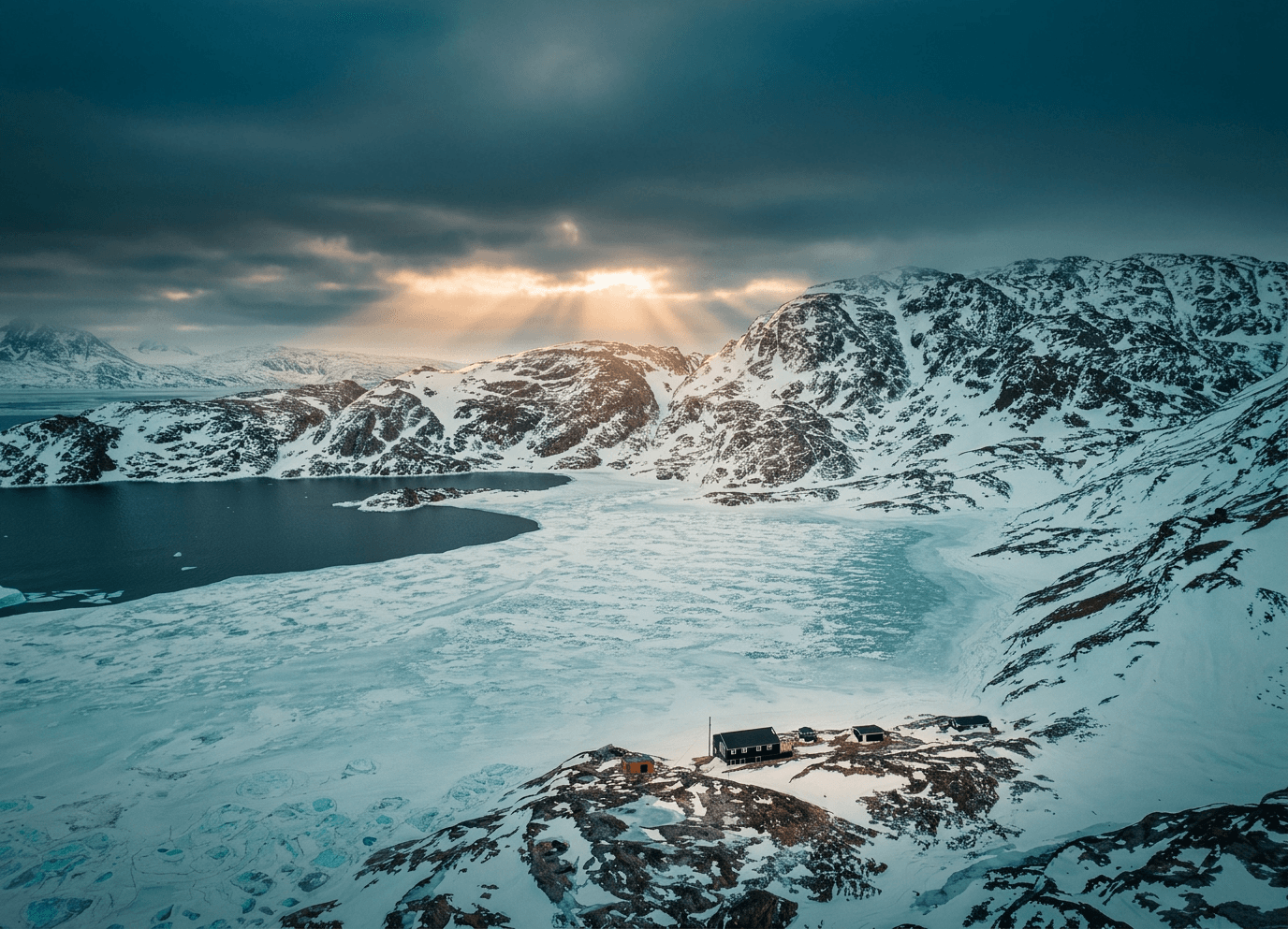
Figure: The Mittivakkat Glacier shown here is located near the Sermilik research station in East Greenland. (© Karl Steinegger 2024)
The Largest Freshwater Reservoirs on Earth
The majority of the world’s freshwater is stored in glaciers and ice sheets. If all of Earth’s ice were formed into spheres and their potential contribution to sea level rise calculated, the following impressive dimensions would result:
Glacier: sea level contribution approx. 0.3 meters; sphere diameter: 68 km
Greenland: sea level contribution approx. 7 meters; sphere diameter: 177 km
Antarctica: sea level contribution approx. 58 meters; sphere diameter: 372 km
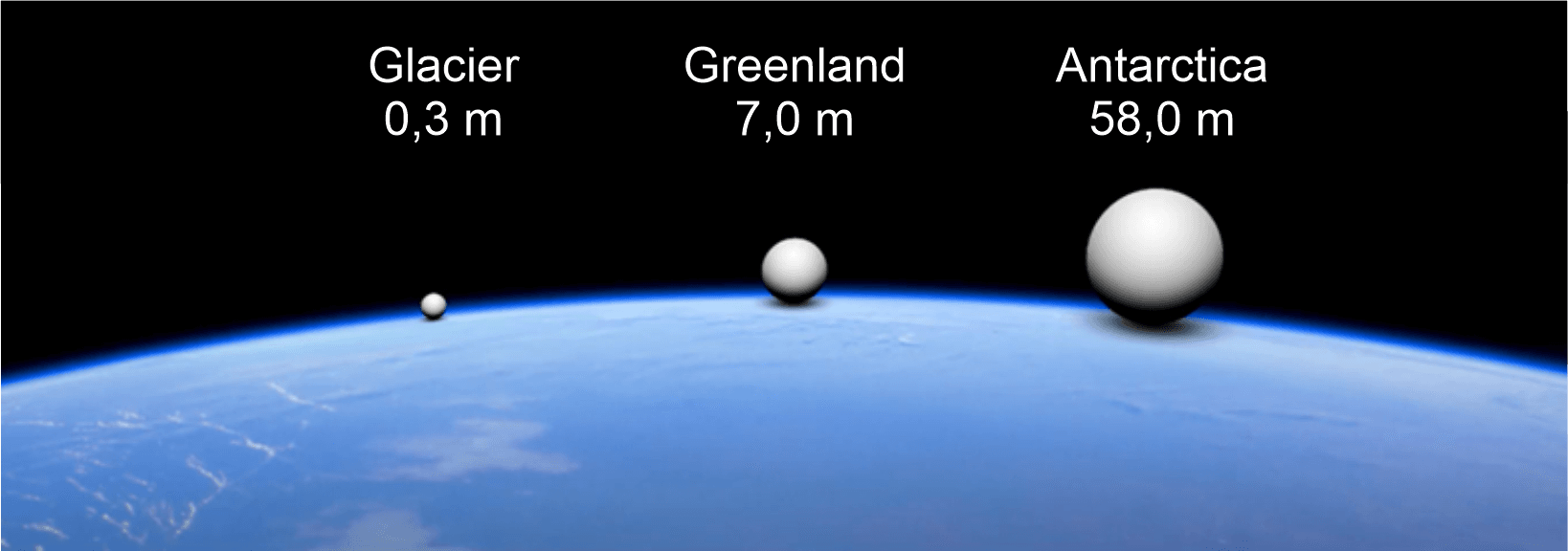
Figure: Total land ice divided into the categories Glacier, Greenland, and Antarctica, represented as spheres; the size of each sphere corresponds to its share of total land ice. (© Jakub Małecki)
“The results show that glaciers worldwide have lost about 5% of their total volume since the year 2000. This corresponds to a global annual loss of 273 billion tons of ice. While all regions are affected by ice loss, the relative changes differ significantly—from 1.5% in Antarctica to 39% in Central Europe.”
The GlaMBIE Team 2025
Glacier Loss – A Global Signal
GlaMBIE stands for Glacier Mass Balance Intercomparison Exercise and is an international research project. It combines various measurement and evaluation methods of glacier mass balance in order to produce a consolidated assessment of global glacier changes between 2000 and 2023.
The results show that glaciers worldwide have lost about 5% of their total volume since the year 2000. This corresponds to a global annual loss of 273 billion tons of ice, with an increase in this loss of 36% from the first (2000–2011) to the second (2012–2023) half of the studied period. While all regions are affected by ice loss, the relative changes differ significantly—from 1.5% in Antarctica to 39% in Central Europe (The GlaMBIE Team 2025).
Video: About GlaMBIE – Glacier Mass Balance Intercomparison Exercise. (© ESA / Planetary Visions)
Glacier Loss by 2100 – Dependent on Climate Protection
A look into the future shows that glacier loss will continue throughout the 21st century. Results from a scientific study published in 2024 (Zekollari et al. 2024) indicate that by mid-century, glaciers worldwide will have already lost about 12–14% of their volume (relative to 2015 volume), largely independent of emission scenarios (SSP -Shared Socioeconomic Pathway). By the year 2100, however, the extent strongly depends on future warming: under an ambitious climate protection pathway, a global loss of around 29% is expected, whereas under persistently high emissions, about half of the glacier volume from 2015 (54%) could be lost. Overall, the models show that a significant portion of glacier mass is already considered lost—but the future extent depends decisively on the trajectory of greenhouse gas emissions.*

Figure: Development of global glacier volume in the 21st century compared to 2015. (© Zekollari et al. 2024)
The Alps and the Arctic: Parallels and Differences in Climate Change
Measurement series from Austria and the Alpine region show a significantly stronger warming than the global average – about twice as strong. A similar, even more pronounced trend is found in the Arctic, where warming is three to four times faster than the global average. This phenomenon is known as Arctic amplification.

Figure: Temperature anomalies relative to the climatological mean of 1961–1990. The figure shows changes in global (orange), Arctic (violet), and Greenland (green) surface temperatures compared to the long-term mean of 1961–1990. Data sources: HadCRUT dataset (Met Office Hadley Centre / Climatic Research Unit) and CRU TS gridded time series. (Sonika Shahi) Right: Temperature anomalies relative to the climatological mean of 1961–1990 in Austria. (© GeoSphere Austria)
The main cause is the so-called ice-albedo feedback: As snow and ice cover decreases, less solar radiation is reflected back into space. The exposed darker water and land surfaces absorb more energy, warm more strongly, and thereby accelerate further ice melt.
While many smaller glaciers, such as those in the Alps or Greenland, respond similarly to rising temperatures, additional mass loss processes occur in polar regions. For example, large glaciers in Greenland and Antarctica calve into the sea. This refers to the breaking off of large ice blocks at the glacier front.
Another characteristic feature of polar regions is the presence of ice shelves. These are large floating ice areas fed by the continental ice sheet. Since they already displace water, they do not directly contribute to sea level rise. However, they play a stabilizing role for the ice sheet behind them: acting as a kind of natural barrier, they slow its flow into the ocean. If ice shelves are lost due to melting or break-up, ice discharge can accelerate significantly and with it, the mass loss of the ice sheet.
The Arctic: Local Changes, Global Impacts
The stronger-than-average warming in the Arctic has global consequences: The temperature difference between mid and high latitudes drives the jet stream, a high-altitude wind belt that significantly influences our weather. If this difference decreases, the jet stream becomes more meandering and slower. The result can be prolonged weather patterns, such as extended dry periods, for example in Austria.

Figure: Conceptual diagram of the jet stream. (© NOAA)
What Does an Austrian Research Station in the Arctic Have to Do With This?
As described above, changes in the Arctic—such as accelerated ice melt contributing to sea level rise or enhanced warming potentially affecting the jet stream—have global implications. The better we understand Arctic processes, the more reliably their consequences for other regions, such as Europe, can be assessed. A research station on site offers crucial advantages: climate changes can only be captured through long-term, as continuous as possible measurement series. Especially in Greenland, a sparsely populated and largely inaccessible part of the Arctic, permanent infrastructure enables new opportunities for systematic observations.

Figure: Sermilik research station. (© Andreas Trügler; Robert Galovic)
To this end, an Austrian research station was preopened in 2023 in Sermilik Fjord in East Greenland, a location with a research tradition dating back to 1933. It enables deliberately interdisciplinary research, as understanding climate change requires the interplay of many disciplines, from glaciology and meteorology to oceanography and anthropology. At the same time, the station works closely with the local population. People on site are directly affected by the changes and possess valuable knowledge about ice, snow, and environmental conditions. This indigenous and local knowledge is actively integrated into the research.
The station also aims to transfer and further develop methods from Alpine research to the Arctic. New measurement approaches and innovative technologies are intended to improve observations of the Arctic cryosphere. Training programs and summer schools are also conducted at the Sermilik station. Thus, the Arctic is not only a hotspot of climate change but also a space for learning and a future-oriented environment for the next generation of researchers.
*The results shown refer to simulations carried out with the Open Global Glacier Model (OGGM).
Medieninformation
Written by Iris Hansche, MSc.
Based on the talk “Im Schatten des Klimawandels – Was bleibt vom ewigen Eis? Status und Zukunft der Gletscher der Welt”, which was held as part of the “Science Talks” lecture series at the University of Graz on 21 March 2025.
Sentence and layout by the APRI Media Team.
Contact: Please use our contact form.
Photos: © as indicated in the captions; cover image: Iris Hansche.
About the author
Iris Hansche is a scientific project staff member at the University of Graz.
Ähnliche Artikel
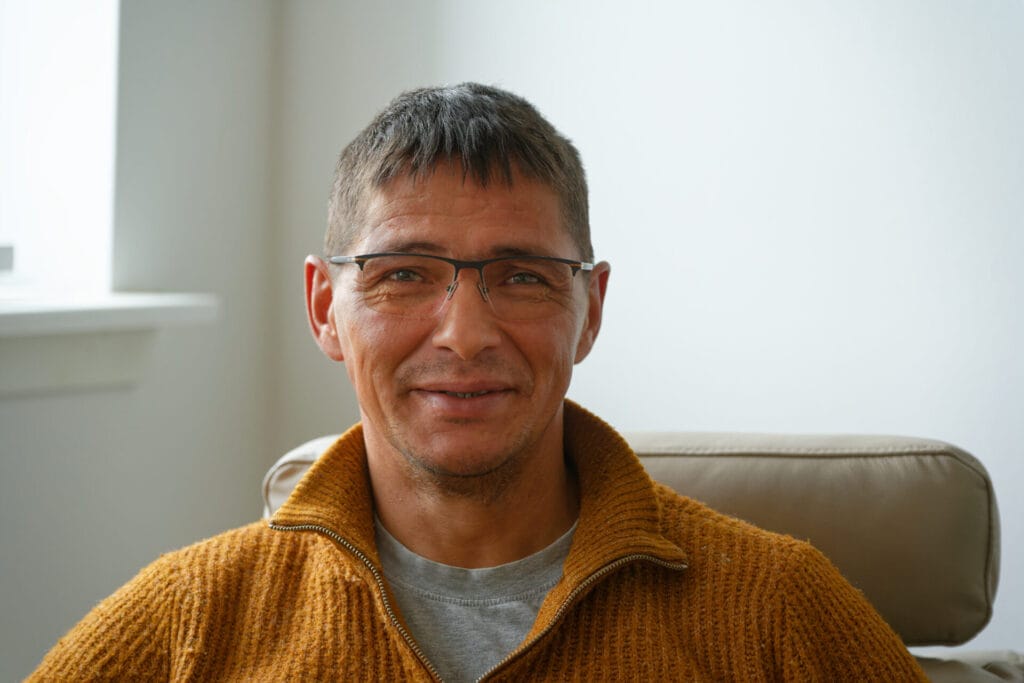
Julius Nielsen, Station Technician at the Sermilik Polar Research Station
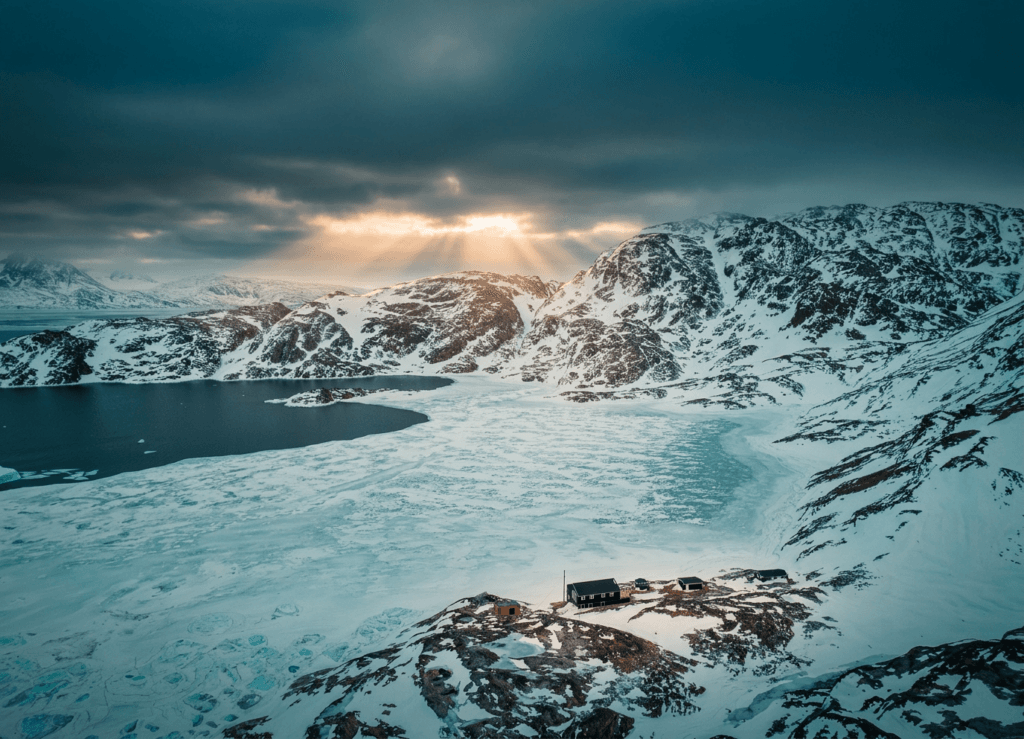
Invitation to the Sermilik Workshop

Research Expedition to the Sermilik Station: How Eduard Orel’s Great-Great-Grandson is Learning Polar Research