
Microbial Ecology of Arctic Marine Ecosystems
Faculty
Research Group Loy
Research Topic
Research Interest
We are studying the biogeography and ecosystem function of microorganisms in permanently cold marine sediments and in Arctic wetlands. Particular research interests include the ecology of cold-adapted sulfur-compound-dissimilating microorganisms that are ubiquitous in marine and terrestrial ecosystems and key catalysts of the sulfur and carbon cycles. We further study anaerobic, thermophilic bacteria that rest as dormant spores on the seafloor and appear to derive from hot subsurface environments such as oil/gas deposits. These dormant bacteria hold general clues about dispersal in the ocean and are potentially useful bioindicators in fossil fuel exploration.

Dr. Alexander Loy
Deputy Head of the Department of Microbiology and Ecosystem Science, University of Vienna
Team
- Stanislava Králová, Ph.D., Postdoc (University of Vienna)
Collaborators
- Bo Barker Jørgensen, Aarhus University, Denmark
- Casey Hubert, University of Calgary, Canada

Team
RNDr. Stanislava Králová, Ph.D.
Projects
- Establishing defined communities of Antarctic soil bacteria as potential sources of antimicrobials (DEFCOMANT) Marie Skłodowska-Curie Individual Fellowship in the EU Horizon 2020 framework programme [2022-2024] fellow Dr. Stanislava Kralova, host Alexander Loy
- The wetland sulfur microbiome: Intra- and interspecies metabolic interactions. FWF Austrian Science Fund [2019-2011] PI Alexander Loy
- Missing links in the marine sulfur cycle – identity and functions of microorganisms utilizing sulfur cycle intermediates and organic sulfur molecules in marine sediments. FWF Austrian Science Fund [2016-2019] PI Kenneth Wasmund
- The cold microbial majority: Ecophysiology, biogeography, and genomics of psychrophilic sulfate-reducing microorganisms in arctic marine sediments. FWF Austrian Science Fund [2013-2018] PI Alexander Loy
- Diversity and biogeography of thermophilic sporeforming sulfate-reducing microorganisms in cold marine sediments: Bioindicators for fluid flow from the hot subsurface? FWF Austrian Science Fund [2007-2012] PI Alexander Loy
Selected Publications
- Mayer, M., Tietsche, S., Haimberger, L., Tsubouchi, T., Mayer, J., & Zuo, H. (2019). An improved estimate of the coupled Arctic energy budget. Journal of Climate, 32(22), 7915-7934.
- Mayer, M., L. Haimberger, M. Pietschnig, and A. Storto (2016), Facets of Arctic energy accumulation based on observations and reanalyses 2000-2015, Geophys. Res. Lett., 43, doi:10.1002/2016GL070557.
- Young, P. J., Butler, A. H., Calvo, N., Haimberger, L., Kushner, P. J., Marsh, D. R., … & Rosenlof, K. H. (2013). Agreement in late twentieth century Southern Hemisphere stratospheric temperature trends in observations and CCMVal‐2, CMIP3, and CMIP5 models. Geophys. Res. Atmospheres, 118(2), 605-613.
- Mayer, M. and Haimberger, L., 2012. Poleward Atmospheric Energy Transports and Their Variability as Evaluated from ECMWF Reanalysis Data, J. Climate, 25(2), pp.734–752.
- A. Grant, Brönnimann, S. and Haimberger, L., 2008, Recent Arctic warming structure contested, Nature, doi: 10.1038/nature07257

Beautiful mud packed with microbes
Beautiful mud packed with microbes
Research Group Loy | APRI

Sediment core being retrieved from Smeerenburgfjorden, Svalbard
Sediment core being retrieved from Smeerenburgfjorden, Svalbard
Research Group Loy | APRI

Glacier entering the marine Smeerenburgfjorden, Svalbard
Glacier entering the marine Smeerenburgfjorden, Svalbard
Research Group Loy | APRI

Claus Pelikan happy with his catch of Svalbard sediment
Claus Pelikan happy with his catch of Svalbard sediment
Research Group Loy | APRI

Up close with iron-rich sediments from Kongsfjorden, Svalbard
Up close with iron-rich sediments from Kongsfjorden, Svalbard
Research Group Loy | APRI
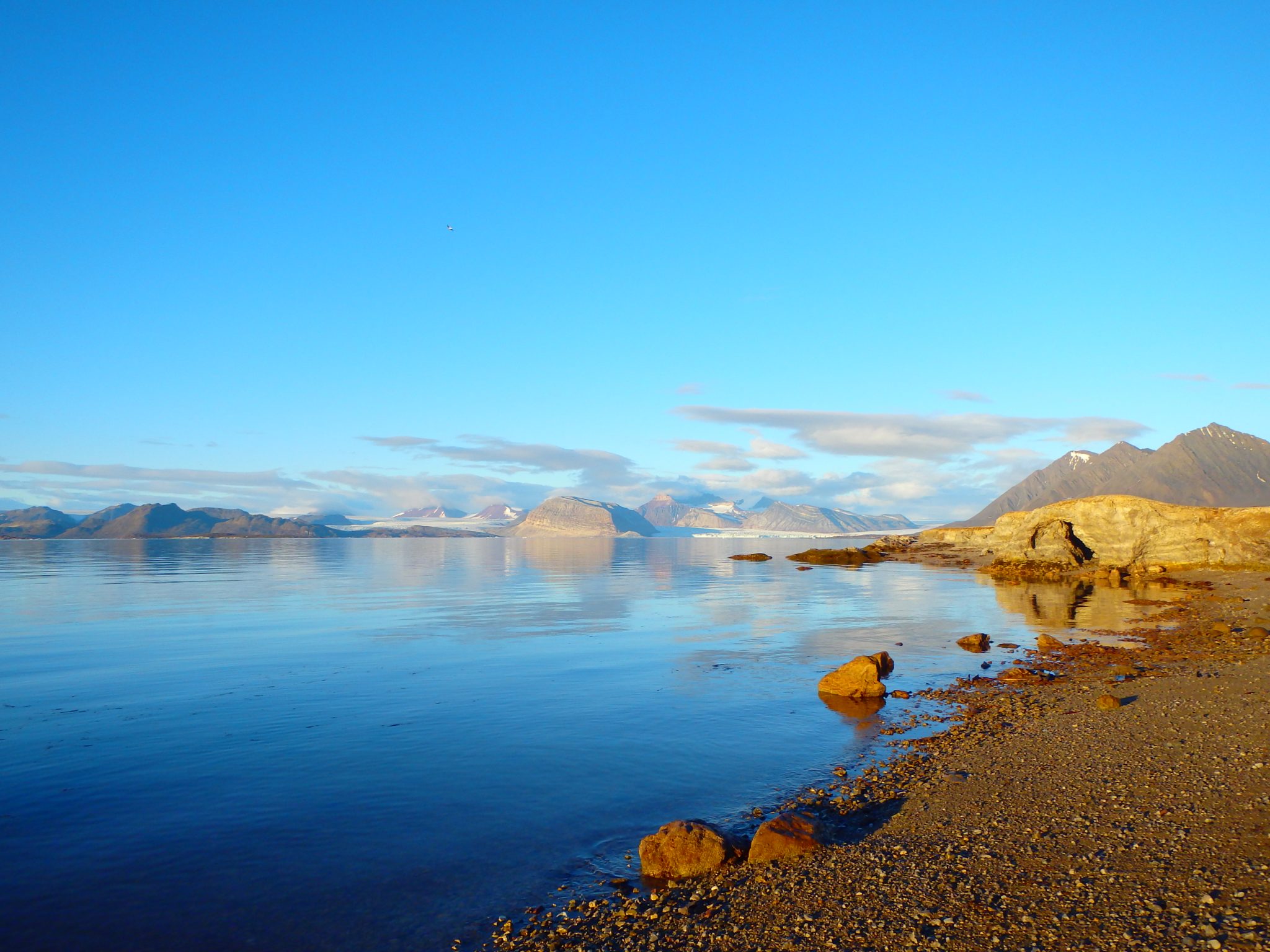
Kongsfjorden, Svalbard
Kongsfjorden, Svalbard
Research Group Loy | APRI